
A Jewish Reading of 1 Corinthians 11:1-16
Temple, Synagogue, Sacred Order, and the Woman’s Covering in the Jewish and Greco-Roman World
Paul’s words in 1 Corinthians 11:2–16 concern men and women who pray and prophesy before others. The setting is therefore public worship, even when that worship occurs in a private house. His appeal to creation, glory, custom, and the Ekklesiae of God shows that he is not merely solving a Corinthian fashion dispute. He is teaching the community how visible practices—especially the covering or uncovering of the head—express honor within a sacred gathering.
The historical question is not whether every Jewish woman everywhere wore the same garment, nor whether every pagan cult followed one ritual pattern. The evidence is more varied than such claims allow. The better question is how hair, veiling, marital status, ritual office, and public respectability were read within the overlapping Jewish, Greek, and Roman worlds of Corinth. Paul’s instruction operates inside that contested field of meanings.
Gentiles Entering a Jewish Sacred Order
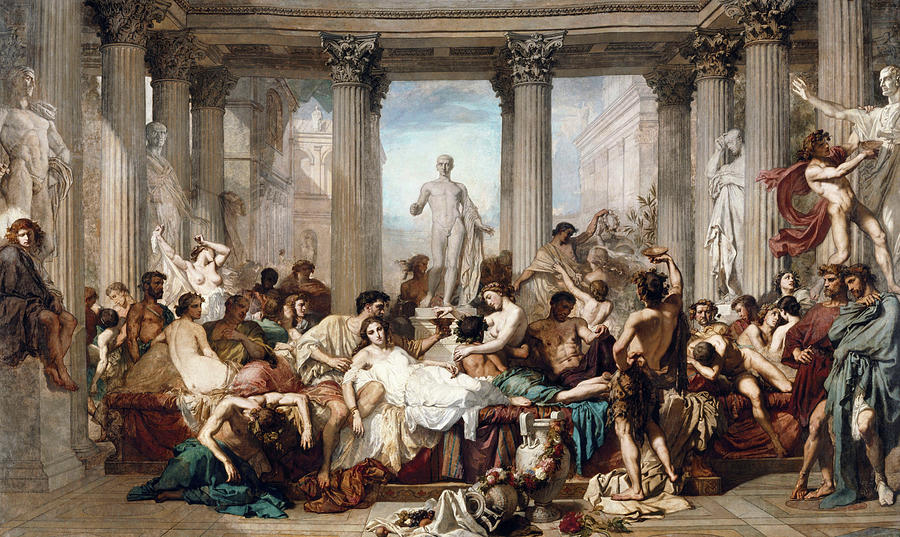
The Corinthian Ekklesia included people whose former religious lives had been shaped by idols, sacrificial meals, household gods, civic festivals, and pagan temple worship (1 Corinthians 6:9–11; 8:7; 10:14–22; 12:2). The Ekklesia was a spiritual community centered on Yeshua and rooted in Jewish sacred life, and its members gathered in recognizably Jewish settings, including synagogues and homes. These settings helped distinguish them from their former pagan associations and from the religious and civic obligations associated with the Roman imperial cult. Entering this Jewish-scriptural environment did not erase the Gentiles’ former religious habits overnight. Paul therefore repeatedly teaches them to distinguish the table of the Lord from the table of demons, orderly prophetic speech from disruptive worship, and freedom in Yeshua from conduct that harms the assembly.
Women were active participants in this new life. Paul takes their praying and prophesying for granted; his concern is how those ministries are enacted. The covering question therefore does not silence women. It regulates the visible conditions under which their speech honors God, the assembly, and the relational order Paul has just named. In a city where appearance could signal status, sexuality, grief, marriage, ritual function, or social defiance, an uncovered or disordered head could be heard as more than a personal preference.
“Every woman who prays or prophesies with her head uncovered dishonors her head” (1 Corinthians 11:5).
The force of Paul’s language is honor and shame within worship. The covering of the head belongs to a larger passage about ordered relationships—God, Yeshua, man, and woman—and must be interpreted with verses 11–12, where Paul immediately refuses any account of male and female that turns order into independence: “neither is the woman without the man, neither the man without the woman, in the Lord.”
Jewish Sacred Community across Temple, Synagogue, and Home
The earliest Yeshua-followers did not understand themselves as a domestic movement defined by house-to-house meetings. They remained within Israel’s sacred world: the Jerusalem Temple provided the covenantal center, synagogues sustained Torah reading, instruction, prayer, and communal fellowship, and homes supplied additional places for meals, hospitality, teaching, and assembly. When believers gathered in a house, the location did not displace the Temple or create an independent household religion. The gathering remained Jewish in Scripture, worship, communal discipline, and orientation toward the God whose name dwelt in Jerusalem.
Roman Association and Social Visibility
- Judaism as an ancestral tradition. Roman authorities often treated Jewish practice as an ancient and identifiable way of life, though its privileges varied by ruler, city, and circumstance. This customary tolerance is sometimes described as religio licita (“permitted religion”), although the phrase was not a formal Roman legal classification. While the Ekklesia was perceived as connected to Jewish communal life, its Gentile members could benefit indirectly from Judaism’s recognized antiquity. However, as the Ekklesia came to be regarded as a movement distinct from its Jewish origins, Gentile believers who rejected pagan and imperial worship lost that limited social shelter and became more vulnerable to suspicion.
- Suspicion of unauthorized associations. Rome could restrict private associations when they appeared politically disruptive, socially disorderly, or difficult to supervise. Meetings in homes therefore carried practical advantages and public risks, but the use of a household did not make the Ekklesia a merely domestic association; its identity remained rooted in Jewish Scripture, covenantal practice, synagogue fellowship, and the Temple-centered sacred order.
- Ambiguous identity. Jewish believers in Yeshua and Gentiles associated with their assemblies could be perceived differently according to place and circumstance. Their protection was therefore negotiated and unstable: it depended partly on whether local authorities continued to regard the Ekklesia as connected to an ancient Jewish tradition or instead treated it as a distinct and potentially unauthorized association. It is thus more accurate to speak of limited social and legal tolerance than of a fixed category of religio licita shielding every gathering.
Source note. The description of religio licita follows the modern scholarly use of the phrase as shorthand for variable Roman tolerance rather than as a formal legal classification.
Orderly conduct at any gathering therefore mattered beyond its immediate setting. Whether believers assembled in a synagogue, a house, or another communal place, their bodily practices could confirm that they belonged to a disciplined Jewish sacred community rooted in Israel’s Scriptures—or expose them to charges of impropriety, novelty, or social disorder.
New Testament Witness to Jewish Fellowship in Homes
| Selected New Testament References to Household Gatherings | |
| Scriptural reference | Household gathering |
| Acts 2:46 | Believers break bread from house to house. |
| Acts 5:42 | Teaching continues in the Temple and in houses. |
| Acts 12:12 | Many gather for prayer in the house of Mary. |
| Romans 16:3–5 | Priscilla and Aquila host an assembly in their house. |
| 1 Corinthians 16:19 | Aquila and Priscilla greet Corinth with the assembly in their house. |
| Colossians 4:15 | Nympha is associated with an assembly in her house. |
| Philemon 1–2 | Philemon, Apphia, Archippus, and the assembly in the house are addressed together. |
These texts show that homes served the Jewish sacred community as places of prayer, teaching, meals, hospitality, and leadership. They do not identify the Jesus movement itself as a domestic movement or place household fellowship in opposition to the Temple and synagogue. Acts instead presents fellowship in homes alongside continuing Temple attendance and synagogue engagement. Women appear not at the margins of this communal life but among its hosts, patrons, coworkers, and prophetic participants.
The Jewish Home within a Temple-Oriented Sacred Order
Ezekiel 11:16 gives the phrase mikdash me’at—“a little sanctuary”—to describe God’s presence with the exiles. Later Jewish interpretation applied this language especially to synagogues and houses of study (b. Megillah 29a). The phrase should not be projected backward as though every first-century dining room formally bore that title. Rather, it expresses the continuity of Jewish sacred life beyond Jerusalem without severing that life from the Temple: Torah, prayer, blessing, hospitality, and disciplined communal practice extended Israel’s covenantal order into local settings.
“Yet will I be to them as a little sanctuary in the countries where they shall come” (Ezekiel 11:16).
For the early Ekklesia, gathering in a home joined Israel’s scriptural rhythms and communal practices to faith in Yeshua. The home did not generate a new domestic cult or replace the synagogue and Temple. It provided a setting in which the Jewish sacred community could receive Gentiles into Israel’s Scriptures, covenantal ethics, prayer, fellowship, and allegiance to the God of Israel.
- Homes extended—not replaced—the communal life expressed in Temple attendance, synagogue instruction, Scripture, and prayer.
- Household hosts could include women as well as men, as the references to Mary, Priscilla, Nympha, and Apphia indicate.
- Because worship remained embedded in Jewish covenantal and public life, conduct at a household gathering affected the reputation of the wider Ekklesia.
Paul’s concern for visible order is therefore intelligible. To pray or prophesy in any assembly setting was to act before God and the gathered body within a Jewish sacred order oriented toward Israel’s Scriptures, covenant, and the Temple in Jerusalem. The woman’s head covering publicly affirmed these covenantal relationships and upheld the divine order. The history of angelic rebellion and the woman’s role within it gives Paul’s phrase “because of the angels” its profound cosmological significance, which will be developed fully later.
Covering, Hair, and the Language of Honor
Jewish sources from later antiquity associate a married woman’s uncovered hair with questions of modesty and marital propriety (m. Ketubot 7:6; b. Ketubot 72a). These texts cannot simply be treated as transcripts of Corinth, yet they preserve a symbolic world in which the head and hair communicated relational status. Paul’s own argument likewise joins the head to honor, shame, glory, creation, and the judgment of the assembly.
- Honor. The covering distinguishes prophetic participation from self-display and places the act within the order Paul announces in verse 3.
- Relational identity. The head is not treated as an isolated private object; it represents the worshiper in relation to God, Yeshua, man, woman, and the assembly.
- Gendered glory. Paul assigns distinct responsibilities to men and women in worship without denying their mutual dependence “in the Lord” (vv. 11–12).
Greco-Roman evidence does not support one universal rule in which all respectable women were always veiled or all cultic women were always unveiled. Practices differed by place, status, ritual, and artistic convention. That diversity strengthens rather than weakens the need for a local apostolic ruling: the Corinthians required a shared practice whose meaning would be defined by the Ekklesia rather than by competing local customs in Corinth.
- Paul assumes women will pray and prophesy.
- He requires that this speech honor the head rather than erase relational distinctions.
- He appeals finally to the common practice of the Ekklesiae of God, not to private preference.
The covering is therefore best read as an embodied confession. It declares that spiritual gifting does not abolish covenantal order, that public ministry is accountable to the assembly, and that belonging to Yeshua gives the head covering a meaning governed by covenant rather than by the surrounding Jewish and pagan customs.
“Because of the Angels”: The Cosmic Horizon
Part 1 prepared for the possibility that Paul’s brief phrase in verse 10 opens the earthly assembly onto a heavenly field. In Jewish Scripture and Second Temple interpretation, angels may be obedient ministers of God, witnesses to worship, guardians of holy order, or rebellious powers associated with idolatry and deception. The immediate context does not identify which angelic tradition Paul expects his hearers to recall, so the phrase must be handled with restraint.
- Heavenly witnesses. Jewish and early apostolic texts can portray angels as present before God and attentive to human worship.
- Guardians of order. The heavenly court reflects an ordered creation in which service, rank, and obedience matter.
- Rebellious powers. Paul has just warned that pagan sacrifices involve fellowship with demons (1 Corinthians 10:20–21), while Jewish traditions about rebellious angels supplied a vocabulary for cosmic disorder.
- Eden as a pattern of deception. Genesis 3, read alongside 1 Timothy 2:14, permits a theological analogy between the serpent’s deception and departure from God’s command, though Paul does not explicitly narrate that analogy in 1 Corinthians 11.
As will be shown more fully, the woman’s covered head acknowledges the restoration of an order first assaulted in Eden: the serpent’s voice displaced God’s command, nakedness followed transgression, and human relations were distorted. This reading follows the midrashic method Paul employs by bringing creation, deception, nakedness, authority, and angelic rebellion together within a Jewish cosmological frame.
Conclusion: Worship under the Peace of God
Read within its household, Jewish, and Greco-Roman setting, 1 Corinthians 11 is not a command to remove women from public ministry. Women pray and prophesy. Nor is it a free-standing dress code detached from theology. Paul joins bodily practice to headship, glory, creation, mutual dependence, communal custom, and the unseen spirit world.
The Temple-oriented, synagogue-connected Ekklesia was the community in which these meanings became visible. Gentiles leaving pagan worship entered assemblies shaped by Israel’s Scriptures, covenantal life, synagogue fellowship, and allegiance to the God whose name dwelt in Jerusalem. Jewish and Gentile believers shared prayer, prophecy, table fellowship, and discipline; women exercised spiritual gifts while following a practice intended to express honor rather than rivalry. The covering marked the worshiper not as voiceless, but as ordered for sacred speech.
Paul’s final aim is peace: the visible and invisible life of the assembly brought into congruence under the God of Israel. This study has shown that the woman’s covering belongs to the Temple-oriented covenantal order of the Ekklesia and carries a cosmological significance grounded in the history of angelic rebellion. The next part of this series will develop that history fully by examining the Edenic and cosmic reading in relation to Torah, Paul, and Second Temple Jewish traditions concerning obedient and rebellious heavenly powers.
Because of the Angels – Part 3
 Ask The Teacher
Your voice matters. Iron sharpens iron. What insights or questions do you bring to the table?