
The Eighth Word – הַמִּלָּה הַשְּׁמִינִית (ha-milah ha-sheminit)
The Eighth Commandment—“You shall not steal” (לֹא תִּגְנֹב, Lo tignov)—is found in Exodus 20:13 and Deuteronomy 5:19. In the structure of the Hebrew Decalogue, Lo tignov is the eighth word—הַמִּלָּה הַשְּׁמִינִית (ha-milah ha-sheminit)—and marks its position as the third commandment on the second tablet. Like the Sixth and Seventh Words, it is delivered with stark brevity. And like those before it, its significance lies not merely in its legal clarity, but in its moral, spiritual, and communal weight.
Placed immediately after the commandments against murder and adultery, the Eighth Word continues the ethical logic of the second tablet—from the sanctity of life, to the sanctity of covenant, and now to the sanctity of justice, labor, and trust. But among all forms of theft, the gravest by far is the stealing of a human being—the crime of kidnapping or person-theft.
I. Theological Structure of the Tablets
The division of the Ten Words into two tablets—bein adam la-Makom (between man and God) and bein adam la-chavero (between man and fellow)—frames the Eighth Commandment as a social-moral imperative. As with the commandments against murder and adultery, Lo tignov operates within the human-to-human domain, but its implications are theological.
Just as God delivered Israel from slavery, so too does He command them never to steal the liberty or property of another. The theft of anything is a denial of divine provision; the theft of a person is a denial of divine ownership.
| Feature | First Tablet | Second Tablet |
| Divine Name (YHVH) | Prominent | Absent |
| Commandment Domain | God–Human | Human–Human |
| Core Principle | Worship and loyalty | Justice and integrity |
| Covenant Focus | Divine faithfulness | Communal responsibility |
II. Rabbinic and Literary Observations
Rabbinic literature emphasizes the seriousness of theft, especially in its relational and societal dimensions.
Mishnah Sanhedrin 7:4 lists kidnapping (geneivat adam) among the capital offenses.
Tosefta Bava Kamma 7:8 says, “One who steals from a person is as if he stole from the Almighty.”
The Sages distinguish between theft (gneivah – secretive), robbery (gezel – forceful), and oppression (oshek – withholding due wages), showing how theft operates across multiple moral dimensions.
Additionally, the rabbis often tie theft to falsehood and deceit (see Leviticus 19:11), framing Lo tignov not only as a prohibition against taking but also against distorting truth and justice.
III. Categorized Mitzvot Related to the Eighth Commandment
Drawing from Rambam’s Sefer HaMitzvot and the Mishneh Torah, here are mitzvot associated with the prohibition of theft, including the theft of persons, property, wages, time, and justice.
Prohibitions (Negative Mitzvot)
| Category | Mitzvah # | Description | Source |
| Theft – Property | 244 | Do not steal (secretly) | Leviticus 19:11 |
| Theft – Robbery | 245 | Do not rob (by force) | Leviticus 19:13 |
| Kidnapping | 36 | Do not kidnap | Exodus 20:13; 21:16 |
| Deceptive Business | 250 | Do not use false measures | Leviticus 19:35 |
| Withholding Wages | 246 | Do not delay payment to a worker | Leviticus 19:13 |
| False Claims | 282 | Do not deny possession of something entrusted | Leviticus 6:2–3 |
| Fraud and Swindling | 253 | Do not mislead or defraud | Leviticus 25:14 |
Positive Mitzvot (Commandments)
| Category | Mitzvah # | Description | Source |
| Restitution | 73 | Return stolen property | Leviticus 5:23 |
| Honesty in Trade | 208 | Use accurate weights and measures | Leviticus 19:36 |
| Employer Ethics | 201 | Pay a worker on time | Deuteronomy 24:15 |
| Charity and Equity | 195 | Leave gleanings for the poor | Leviticus 19:9–10 |
| Judicial Fairness | 227 | Judge righteously without favoritism | Deuteronomy 16:18–20 |
These commandments create a justice-based framework that upholds economic fairness, personal dignity, and social trust. Theft disrupts divine order and the communal ethic of chesed (lovingkindness) and emet (truth).
IV. Theft of Persons: Kidnapping and Slavery – The Gravest Form of Stealing
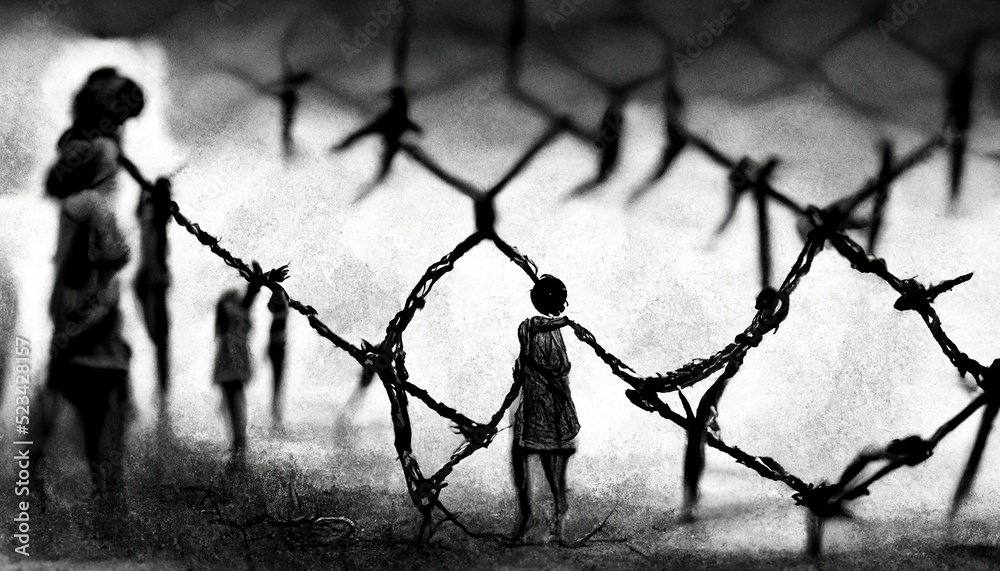
“Whoever kidnaps another person… shall surely be put to death.” (Exodus 21:16; Deuteronomy 24:7) This command is rooted in Israel’s experience of being stolen into slavery in Egypt. To kidnap, sell, or enslave another is to reenact Pharaoh’s oppression and reject the redemptive heart of the Exodus.
Theft of persons includes:
- Kidnapping and trafficking
- Forced labor or enslavement
- Coerced migration or false imprisonment
- Child abduction, especially for exploitation
- Identity theft and erasure
- The commodification of human bodies or identities
Each of these constitutes a dehumanization of the person, reducing them to property—to deny them the dignity of being b’tzelem Elohim, made in the image of God- a reversal of the Exodus, and a reenactment of Egypt’s crimes.
In modern terms, this commandment demands serious reckoning with the legacies and realities of human trafficking, slavery, mass incarceration, economic exploitation, and even identity theft—where a person’s very self is hijacked and violated.
The commandment, therefore, reaches far beyond burglary and economic theft. It addresses the heart of human worth.
In prophetic literature, these crimes are associated with the shedding of innocent blood and divine judgment. Amos 2:6–7 denounces those “who sell the righteous for silver, and the needy for a pair of sandals.”
The Eighth Commandment is a divine safeguard against all systems—ancient or modern—that commodify human life.
This is not merely theft of property—it is the theft of nefesh, of soul, of personhood. It is the ultimate violation of God’s image in man. Unlike the theft of objects, which requires restitution, the theft of a human life calls for capital punishment. The gravity of this offense reveals the theological weight behind the Eighth Word: to steal a person is to attempt to possess what only God owns—a human soul.
In rabbinic tradition, this form of theft is closely tied to Joseph’s abduction and sale by his brothers (Genesis 37), a sin later confessed and mourned. The trauma of person-theft reverberates through the biblical narrative, echoing in Israel’s own experience of slavery in Egypt. It is no coincidence that the very people commanded “You shall not steal” are those who were once stolen, trafficked, and oppressed.
Thus, the Eighth Commandment is not a generic call against petty theft. It is rooted in the memory of bondage and the value of human freedom.:
V. Prophetic Witness Against Theft and Injustice
The Prophets continually denounce theft in its personal, legal, and structural forms.
Isaiah 1:23 – “Your rulers are rebels, companions of thieves… they do not defend the orphan.”
Micah 2:1–2 – “They covet fields and seize them… they oppress a man and his house.”
Jeremiah 7:9–10 – “Will you steal, murder, and commit adultery… and then come and stand before Me in this house?”
In these texts, theft becomes a symbol of societal breakdown—a sign that the covenant has been forsaken, and that judgment is near.
VI. Spiritual Extensions of the Eighth Word
As with the Sixth and Seventh Commandments, the Eighth Word extends beyond the physical act. Theft may take many spiritual forms:
- Geneivat da’at – “stealing the mind” or misleading others
- Deception in business or speech
- Flattery and manipulation for personal gain
- Taking credit for another’s work
- Withholding truth or justice
- Stealing time (employer time, or wasting others’ efforts)
- Stealing joy or peace through gossip or slander
Geneivat Da’at (גניבת דעת), meaning “theft of the mind” or “deception,” is a concept in Jewish law and ethics that refers to misleading or deceiving others, even without direct financial harm. While the term itself does not appear explicitly in the Torah, its principles are derived from biblical and rabbinic sources.
Origins in Jewish Texts
- The concept is attributed to Samuel of Nehardea in the Babylonian Talmud, where he states: “It is forbidden to mislead people, even a non-Jew”.
- Some rabbinic exegesis connects Geneivat Da’at to Genesis 31:26, where Laban accuses Jacob of deceiving him, and 2 Samuel 15:6, where Absalom manipulates public perception to gain support.
- The Midrash even describes Geneivat Da’at as the worst form of theft because it directly harms a person’s understanding rather than just their property.
Application in Jewish Ethics
- It applies broadly, including business transactions, social interactions, and even hospitality. For example, inviting someone to dinner while knowing they cannot attend, just to appear generous, is considered Geneivat Da’at.
- In contemporary Jewish ethics, it is used to evaluate deceptive advertising, misleading packaging, and dishonest business practices.
Geneivat Da’at (גניבת דעת), or “theft of the mind,” is a fascinating ethical principle in Jewish law that extends beyond financial dishonesty to include deception in interpersonal interactions. It is considered one of the most serious forms of theft because it manipulates a person’s understanding rather than simply taking their property.
Modern Applications in Jewish Law
- Business Ethics: Geneivat Da’at is frequently applied to advertising and sales practices. For example, misleading discounts, deceptive packaging, or falsely claiming a product is on sale when it is not all fall under this prohibition.
- Social Interactions: The principle also governs personal behavior. For instance, inviting someone to an event while knowing they cannot attend—just to appear generous—is considered deceptive.
- Academic Integrity: In educational settings, misrepresenting one’s knowledge or credentials can be seen as a form of Geneivat Da’at.
- Legal and Political Contexts: Some scholars apply this principle to misleading political rhetoric or legal arguments designed to manipulate public perception.
Jesus reaffirms this internalization of law when He confronts the heart’s intent, condemning not only robbery but also covetousness, which leads to theft:
“Beware of covetousness: for a man’s life does not consist in the abundance of his possessions.” (Luke 12:15)
VII. The Eighth Word and the Gospel: Theft in the Teachings of Jesus and the Apostles
In the New Testament, the commandment “You shall not steal” is reaffirmed as a foundational moral principle. But as with other commandments, Jesus and the Apostles deepen its meaning—moving from external action to inward motivation and community ethics.
The New Testament Affirms the Mitzvot That Flow from the Eighth Word
Contrary to common Christian misconceptions, the New Testament does not isolate the Ten Commandments as uniquely moral while discarding the rest of the mitzvot. The New Testament not only reaffirms the Eighth Commandment but also implicitly affirms and reinforces many of the specific mitzvot among the 613 that flow from or elaborate upon Lo tignov. This includes laws concerning property, fraud, labor ethics, and especially the stealing of persons and does so within a Jewish covenantal framework:
The Apostles and writers of the New Testament, as observant Jews writing within a Jewish theological worldview, did not treat the Eighth Commandment as a narrow prohibition. They saw it as the gateway to a network of ethical imperatives, many of which are explicitly or implicitly reaffirmed in their writings.
1. Mitzvah: Do Not Steal (Geneivah) – Leviticus 19:11
“Do not steal. Do not lie. Do not deceive one another.”
Affirmed in: Matthew 19:18, Romans 13:9, Ephesians 4:28
New Testament Expansion: “Let the thief no longer steal… but work… to share with others.” (Eph. 4:28)
2. Mitzvah: Do Not Kidnap (Geneivat Adam) – Exodus 21:16
“Whoever steals a man… shall surely be put to death.”
Affirmed in: 1 Timothy 1:10 – “man-stealers” (andrapodistēs) are listed among the wicked.
Significance: This mitzvah is one of the only theft laws in Torah punishable by death and is directly referenced in NT moral instruction.
3. Mitzvah: Do Not Withhold Wages – Leviticus 19:13; Deuteronomy 24:15
“You shall not oppress your neighbor… the wages of a hired servant shall not remain with you overnight.”
Affirmed in: James 5:4 – “The wages of the laborers… which you kept back by fraud, are crying out against you.”
Significance: James, writing as a Torah-faithful Jew, applies the mitzvah directly to the early Messianic community.
4. Mitzvah: Use Honest Weights and Measures – Leviticus 19:35–36
“You shall do no wrong in judgment, in measures of length or weight or quantity…”
Affirmed in Principle: Luke 6:38 – “For with the measure you use, it will be measured back to you.”
Pauline Application: 1 Thess. 4:6 – “No one should defraud his brother…”
These mitzvot are not treated as ceremonial relics—they are moral imperatives, flowing directly from Lo tignov, and foundational to community life in both Torah and the New Covenant.
✡️ Summary Table: Mitzvot Related to Lo tignov Affirmed in the New Testament
| Mitzvah (Torah) | Command | Mitzvah # | NT Affirmation | Reference |
| Leviticus 19:11 | Do not steal | 244 | Explicitly reaffirmed | Matthew 19:18; Romans 13:9 |
| Exodus 21:16 | Do not kidnap (steal a person) | 36 | Directly referenced | 1 Timothy 1:10 |
| Leviticus 19:13 / Deuteronomy 24:15 | Pay wages promptly | 246 | Explicitly echoed | James 5:4 |
| Leviticus 19:35–36 | Use fair weights and measures | 253 | Implicitly affirmed | Luke 6:38 |
| Leviticus 6:2–5 | Restore stolen goods | 73 | Modeled in repentance | Luke 19:8 (Zacchaeus) |
| Deuteronomy 25:13–16 | No dishonest scales | 250 | Implicit moral principle | 1 Thessalonians 4:6 |
5. The New Testament Does Not Create a New Morality—It Applies Torah Morality to a Renewed Heart
When Paul and James speak of law (nomos) in relation to theft, they are not reinventing moral categories. They are drawing on the Torah’s internal moral architecture, and applying it within the framework of new covenant transformation.
The thief must not only stop stealing, but begin working and giving (Ephesians 4:28)
The employer must pay wages justly and promptly (James 5:4)
The community must restore what is taken and repent for past wrongs (Luke 19:8–9)
All believers are called to walk honestly, uprightly, and generously—living out the justice of Torah as fulfilled in love (Romans 13:9–10)
6. The Eighth Commandment in the New Testament is Torah-Loyal
The New Testament’s treatment of the Eighth Commandment reflects Jewish continuity, not rupture. It does not extract a moral kernel from Torah and discard the rest. Rather, it recognizes that Lo tignov is:
The summary command of a larger network of mitzvot
A covenantal ethic, not just a rule
Affirmed and expanded in Messiah’s teachings
Reapplied to community life, justice, economics, and repentance
To follow You shall not steal in New Testament faith is to honor the Torah’s vision of justice, and to live in the integrity of the covenant that calls for restitution, generosity, and love of neighbor.
“Whatever other commandment there may be… is summed up in this: Love your neighbor as yourself.” (Romans 13:9)
Comparative Chart: The Two Tablets and the Moral Mirror
The structure of the Ten Words reveals a mirrored ethical vision. Just as the second commandment of the first tablet forbids idolatry (betraying God’s ownership), the third commandment of the second tablet forbids theft (betraying another’s God-given stewardship).
| Tablet | Position | Hebrew Word | English Translation | Core Meaning | Parallel |
| First | 2nd | לֹא תַעֲשֶׂה לְךָ פֶסֶל | “You shall not make for yourself a carved image” | Do not steal God’s glory | Covenant loyalty |
| Second | 3rd | לֹא תִּגְנֹב | “You shall not steal” | Do not take what God gave to others | Communal justice |
This parallel reinforces the idea that to steal from another is also to steal from God, who alone is the true Giver and Owner.
VIII Robbery from God: The Ultimate Violation of the Eighth Commandment
The Eighth Commandment—“You shall not steal” (לֹא תִגְנֹב, Lo tignov)—is often read narrowly as a prohibition against theft between people. But Scripture reveals a deeper dimension: stealing from God.
This is not poetic or metaphorical language. In both the Tanakh and the New Testament, robbing God is presented as a covenantal violation with judicial consequences. Withholding from God what is rightfully His—whether tithes, offerings, honor, worship, or sacred goods—is theft in its most sobering form. For God is not merely a lawgiver; He is the Owner of all.
1. Withholding Tithes: Robbing the Divine Treasury (Malachi 3:8–10)
“Will a man rob God? Yet you are robbing Me. But you say, ‘How have we robbed You?’ In tithes and contributions. You are cursed with a curse, for you are robbing Me, the whole nation of you.” (Malachi 3:8–9)
Malachi exposes the act of neglecting tithes as a legal transgression against the covenant. The tithe was not a charitable suggestion—it was a divine claim. To withhold it was to embezzle from the very One who gave the land and its produce.
Key Mitzvot:
– #394 – To give a tenth of produce (Deuteronomy 14:22)
– #395 – To separate the second tithe (Deuteronomy 14:28)
– #507 – To bring first fruits (Exodus 23:19)
2. Achan’s Sin: Misusing the Devoted Things (Joshua 7:1–26)

“Israel has sinned… they have taken some of the devoted things; they have stolen and lied…” (Joshua 7:11)
Achan’s theft from the “cherem” (חֵרֶם)—items devoted to destruction or set apart for God’s treasury—was not just personal disobedience. It was sacrilege, and its impact was national.
Key Mitzvot:
– #285 – Do not benefit from items under the ban (Deuteronomy 13:17)
– #508 – Do not withhold items designated for the Sanctuary (Numbers 5:10)
3. New Testament Echoes of Spiritual Theft

Ananias and Sapphira – Acts 5:1–11
They sold property and claimed to give the full amount but secretly held back a portion.
“You have not lied to man but to God.” (Acts 5:4)
Though the word “steal” is not used, the narrative portrays it as defrauding the Holy Spirit. The consequence—immediate death—echoes Achan’s fate.
Paul on Hypocrisy – Romans 2:21–22
“You who preach against stealing, do you steal? … You who abhor idols, do you rob temples?”
Paul challenges religious leaders who preach holiness but misuse sacred authority.
4. Theological Foundation: God Owns All
“The earth is the Lord’s, and everything in it.” (Psalm 24:1)
This foundational truth runs through Torah and Gospel alike. Humans are stewards, not sovereigns. All wealth, all time, all breath—belongs to God. To withhold what He has entrusted is to claim ownership over what is not ours.
Summary Table: Robbery from God in Scripture
| Scripture | Act of Robbery | Related Mitzvot | Consequence |
| Malachi 3:8–10 | Withholding tithes and offerings | #394, #395, #507 | National curse |
| Joshua 7:11 | Taking sacred things for personal use | #285, #508 | Defeat, judgment |
| Acts 5:4 | Lying about sacred giving | (Echoes Achan) | Sudden death |
| Romans 2:22 | Robbing temples | #508 | Condemned hypocrisy |
✡️ Conclusion: A Covenant of Stewardship
“Honor the Lord with your wealth and with the firstfruits of all your produce.” (Proverbs 3:9)
To obey the Eighth Word is to acknowledge that nothing is truly our own. It is to honor the King with the firstfruits of time, treasure, and devotion.
IX. The Suspension of Temple-Dependent Mitzvot in Jewish Tradition
In traditional Jewish law, several commandments associated with tithing and offerings cannot be performed today because they are dependent on the presence of the Temple and the active priesthood. These include:
– Mitzvah #394 – To give a tenth of produce (Deuteronomy 14:22)
– Mitzvah #395 – To separate the second tithe (Deuteronomy 14:28)
– Mitzvah #507 – To bring first fruits to God (Exodus 23:19)
These commandments fall into the category of mitzvot that are “dependent on the Land of Israel” (mitzvot hateluyot ba’aretz) and more specifically those which require the functioning of the Beit HaMikdash (Temple) and the service of the kohanim (priests).
Because the Temple was destroyed in 70 CE and the priestly system is not operational, these mitzvot are considered b’shevatel—“in suspension.” They are not viewed as abolished or obsolete but as temporarily inactive. Their full observance will only resume in the Messianic era, when the Temple is rebuilt and the priesthood is restored.
Today, observant Jews may symbolically separate tithes or recall these commandments as part of agricultural halakhah in Israel, but the offerings are not brought to the Temple, nor are the first fruits delivered to Jerusalem. These actions are preserved more as remembrances than fulfilled commandments.
Nevertheless, the moral and theological principles behind these mitzvot continue to carry weight. They are understood to reflect Israel’s covenantal responsibility to honor God with the first and the best of their increase. Their suspension is not a dismissal but a pause in their active performance, awaiting prophetic restoration.
Thus, while Malachi’s accusation—“You are robbing Me” (Malachi 3:8)—was directly applicable in the Temple era, today Jews acknowledge these commandments as binding in principle but unfulfillable in practice. Their suspension serves as a sign of longing for restoration, not a rejection of God’s rightful claim.
X RESTITUTION
. The New Testament teaches that restitution and reconciliation are essential prerequisites for genuine worship and acceptable prayer. This aligns directly with Torah principles regarding theft and restoring what has been wrongfully taken or broken in relationships.
Here’s how the New Testament affirms this Torah ethic of restitution before worship:
🔹 Matthew 5:23–24 – Reconciliation Before Offering
“So if you are offering your gift at the altar and there remember that your brother has something against you,
leave your gift there before the altar and go. First be reconciled to your brother, and then come and offer your gift.”
Context: This is part of Jesus’ Sermon on the Mount (Matthew 5–7), where He expands the inner meaning of the commandments.
Connection to Torah: In Torah, offerings brought to the altar were invalid if stolen goods were not first restored (Leviticus 6:2–7).
Implication: Jesus is affirming the Torah principle that one cannot approach God in worship while remaining unreconciled or unrepentant of interpersonal sin—especially if it involves theft, fraud, or injustice.
Luke 19:8–9 – Zacchaeus and the Model of Restitution
“Behold, Lord, the half of my goods I give to the poor. And if I have defrauded anyone of anything, I restore it fourfold.”
Jesus said to him, “Today salvation has come to this house…”
Zacchaeus doesn’t just repent privately—he takes public, restorative action in the spirit of Exodus 22:1.
Jesus affirms that this restitution is evidence of true repentance and a heart prepared for divine fellowship.
Torah Foundation: Leviticus 6:2–7
“If anyone sins and commits a breach of faith against the Lord by deceiving his neighbor… he shall restore it in full and shall add a fifth to it… then he shall bring to the Lord as his compensation a ram without blemish…”
Worship was not acceptable until restitution was made to the injured party.
Theological Insight: Restitution Restores Both Human and Divine Relationships
Restitution is covenantal repair—it restores justice and mends relationships.
Jesus affirms that you cannot separate love of God from love of neighbor.
Prayer, worship, and sacrifice are invalid without a clean conscience and reconciled heart.
Conclusion
The New Testament clearly teaches that restitution must come before prayer or worship, just as Torah commands. This further confirms that the ethical mitzvot connected to Lo tignov remain not only valid but central in the kingdom teachings of Jesus.
“If anyone says, ‘I love God,’ and hates his brother, he is a liar…” (1 John 4:20)
XI. SELF STEALING
1. The Ethical Expansion: From Others to Self
The traditional understanding of the Eighth Commandment centers on interpersonal ethics—prohibiting theft of property, persons, or rights. But what if the command also implies a moral responsibility to preserve one’s own good? What if some of the most devastating forms of theft are internal?
To take drugs or indulge in impulsive pleasure is, in a profound sense, to steal from oneself—one’s future capacity for joy, clarity, health, and purpose. Like cashing a check before it matures, it yields a brief high at the expense of lasting wealth.
This interpretation shifts the focus from criminality to character—from breaking laws to breaking oneself.
2. Biblical Roots of Delayed Gratification
The Hebrew Bible repeatedly upholds discipline, self-control, and deferred reward:
– “Better is the end of a thing than its beginning; better a patient spirit than a proud one” (Ecclesiastes 7:8)
– “The soul of the sluggard craves and gets nothing, while the soul of the diligent is richly supplied” (Proverbs 13:4)
– “Whoever loves discipline loves knowledge…” (Proverbs 12:1)
To abandon discipline is to betray oneself—to steal the fruits of what endurance could have borne.
3. Rabbinic Echoes: Guarding the Inner Good
Rabbinic thought offers categories for sins committed not only against others (bein adam la-chavero) but against oneself (bein adam le-atzmo). The Mishnah and later Mussar literature view the yetzer hara (evil inclination) not simply as a source of external misdeeds but as an inner thief:
“A person’s enemies are the members of his own household” — Micah 7:6, interpreted by the sages as the internal faculties misused.
The sages teach that wasting potential, time, or health is a form of moral decay. To dull the mind through substance abuse is akin to vandalizing the divine image within.
4. Mitzvot and Mishnah: Indirect Theft
While there is no explicit mitzvah in the 613 against “stealing from oneself,” several commandments imply it:
– Mitzvah #184 — To rebuke a sinner: Applied inwardly, this includes rebuking the self.
– Mitzvah #195 — Not to destroy anything needlessly (bal tashchit): This includes the destruction of one’s own body and faculties.
The rabbis understood the body as a vessel on loan from God. Thus, self-harm, self-sabotage, and substance abuse can be viewed as violations of divine trust.
5. Theology of Integrity: Duties to the Self
In Jewish and broader theological ethics, duties are not only vertical (to God) or horizontal (to others), but internal—to oneself as bearer of divine image (tzelem Elohim). The Baal Shem Tov taught that “a small hole in the soul sinks the whole ship.”
To steal from oneself is:
– To rob one’s future by clinging to momentary indulgence
– To abandon the path of growth for counterfeit comfort
– To betray the sacred task of becoming who one is called to be


Your voice matters. Iron sharpens iron. What insights or questions do you bring to the table?