
The Seventh Word – הַמִּלָּה הַשְּׁבִיעִית (ha-milah ha-shevi’it)

The Seventh Commandment—“You shall not commit adultery” (לֹא תִנְאָף, Lo tina’af)—is found in Exodus 20:13 and Deuteronomy 5:18. In the Hebrew structure of Deuteronomy, the phrase Lo tina’af is the seventh word—הַמִּלָּה הַשְּׁבִיעִית (ha-milah ha-shevi’it)—marking its placement as the second commandment on the second tablet of the Decalogue. Like the Sixth Commandment, it is concise, direct, and devoid of elaboration—underscoring the gravity and clarity of the moral standard being conveyed.
The Seventh Word follows immediately after the prohibition on murder, extending the ethical demands of the second tablet from the sanctity of life to the sanctity of covenantal relationships. In Jewish thought, adultery represents not only a personal moral failure but a communal breach—violating trust, purity, and justice within society.
I. Theological Structure of the Tablets
The division of the Ten Words into two tablets, as taught by the Mekhilta de-Rabbi Yishmael (Yitro 8), places the first five commandments as duties toward God (bein adam la-Makom) and the last five as duties toward others (bein adam la-chavero). This structure is emphasized by the presence of the Divine Name (YHVH) in the first tablet and its notable absence in the second.
In this schema, the Seventh Word functions within the human-to-human sphere. Yet its roots are covenantal. Adultery is more than a private offense—it is a betrayal of a sacred trust. Just as the first tablet demands exclusive loyalty to God, the second tablet demands exclusive loyalty within marriage. Both domains are rooted in covenant.
II. Literary and Rabbinic Observations
The brevity of לֹא תִנְאָף (Lo tina’af) mirrors the terse, uncompromising tone of the other ethical commandments in Exodus 20:13–17. Rabbinic literature often links adultery to broader patterns of unfaithfulness. The Talmud (Sotah 3a) teaches, “A person does not commit adultery unless a spirit of folly enters him”—highlighting its irrational and destructive character.
Adultery is sometimes associated with idolatry, both being forms of covenantal breach. Hosea, Jeremiah, and Ezekiel portray Israel’s unfaithfulness to God in the language of marital infidelity. The implication is profound: to commit adultery is not only to harm a spouse but to mirror the same disloyalty that leads people away from God.
III. Comparative Charts: The Two Tablets
| Feature | First Tablet | Second Tablet |
| Divine Name (YHVH) | Repeated prominently | Completely absent |
| Sphere of Commandments | Divine–Human (bein adam la-Makom) | Human–Human (bein adam la-chavero) |
| Emphasis | Worship, covenant loyalty | Justice, trust, relational fidelity |
| Mode of Authority | Based on divine revelation | Based on ethical obligation |
IV. Categorized Mitzvot Related to Adultery
Below is a categorized list of mitzvot connected to the Seventh Commandment: “You shall not commit adultery” (Lo tina’af, Exodus 20:13 / Deuteronomy 5:18), based on Rambam’s Sefer HaMitzvot and Mishneh Torah. These mitzvot address adultery, sexual immorality, forbidden unions, and obligations that uphold sexual sanctity.
Prohibitions (Negative Mitzvot)
| Category | Mitzvah # | Description | Source |
| Adultery | 13 | Not to commit adultery | Exodus 20:13 |
| Forbidden Unions | 345 | Not to have relations with certain close relatives | Leviticus 18:6 |
| Forbidden Union – Sister | 346 | Not to have relations with one’s sister | Leviticus 18:9 |
| Forbidden Union – Mother | 347 | Not to have relations with one’s mother | Leviticus 18:7 |
| Forbidden Union – Daughter | 348 | Not to have relations with one’s daughter | Leviticus 18:10 |
| Forbidden Union – Aunt | 349 | Not to have relations with one’s father’s or mother’s sister | Leviticus 18:12–13 |
| Adultery – Married Woman | 355 | Not to have relations with a married woman | Leviticus 18:20 |
| Homosexual Acts | 350 | Not to commit homosexual acts (male) | Leviticus 18:22 |
| Bestiality | 351 | Not to engage in relations with an animal | Leviticus 18:23 |
| Seduction | 359 | Not to seduce a virgin without marriage | Exodus 22:15 |
| Rape | 361 | Not to force a woman sexually (rape) | Deuteronomy 22:25 |
| Incestuous Marriages | 353 | Not to marry those forbidden for relations | Leviticus 18 |
Positive Mitzvot (Commandments)
| Category | Mitzvah # | Description | Source |
| Marital Sanctity | 212 | To sanctify marriage through kiddushin | Deuteronomy 24:1 |
| Suspected Adulteress | 223 | To carry out the laws of the suspected adulteress (Sotah) | Numbers 5:12–31 |
| Rebuke for Sin | 184 | To rebuke a sinner (e.g., intervene in potential immorality) | Leviticus 19:17 |
| Modesty and Boundaries | — | Guarding modest behavior (tzniut) – implied across Torah | Various |
Civil and Judicial Frameworks
| Category | Mitzvah # | Description | Source |
| Judicial Process | 228 | To establish courts of justice to try such cases | Deuteronomy 16:18 |
| Witness Laws | 273 | Not to bear false witness | Exodus 20:16 |
Together, these mitzvot form a comprehensive framework protecting the holiness of sexual relations, the sanctity of marriage, and the moral fabric of the community. Adultery is not treated as an isolated offense but as a representative transgression of a broader class of sacred boundaries (gedarim).
V. Spiritual Adultery: Metaphorical and Prophetic Dimensions
The prophets frequently use the image of adultery to describe Israel’s unfaithfulness. Hosea’s marriage to Gomer becomes a living parable of God’s covenant with Israel. In Jeremiah 3:20, the Lord laments: “Surely, as a wife treacherously departs from her husband, so have you dealt treacherously with Me.”
Jesus employs the same metaphor in Matthew 12:39, calling his generation “an evil and adulterous generation”—not because of literal infidelity, but because of spiritual unfaithfulness. The metaphor of marriage thus becomes a theological lens through which both divine and human covenants are viewed.
VI. Inner Life and Hidden Infidelity
Adultery, like murder, begins in the heart. In Matthew 5:27–28, Jesus teaches:
“You have heard it said, ‘You shall not commit adultery.’ But I say to you, whoever looks at a woman with lust has already committed adultery with her in his heart.”
Paul, too, often uses “sexual immorality” (porneia, πορνεία) as a broad category that includes all illicit sexual behavior:
- 1 Thessalonians 4:3 – “This is the will of God: your sanctification, that you abstain from sexual immorality.”
- 1 Corinthians 6:18 – “Flee from sexual immorality…”
In Revelation, Jesus rebukes churches for “tolerating Jezebel,” who leads people into sexual immorality (porneia) and idolatry (Rev. 2:20), linking back to the prophetic tradition of adultery = idolatry.
This radical interiorization of the commandment aligns with rabbinic emphases on guarding the heart and the eyes. Job declares, “I have made a covenant with my eyes; how then could I gaze at a virgin?” (Job 31:1)
Modesty (tzniut), emotional boundaries, and fidelity of thought and desire are all part of the ethical vision embedded in the Seventh Commandment. Faithfulness is not merely a legal matter—it is a matter of character.
Rabbinic literature extends the scope of the Seventh Commandment far beyond the act of adultery itself. Just like the Sixth Commandment was spiritually expanded to include anger, hatred, and character assassination, the Seventh Commandment is also broadened in Jewish thought to include inner purity, modesty, speech, imagination, and emotional faithfulness.
Here are spiritual extensions of the Seventh Commandment that are not explicitly among the 613 mitzvot, but are found in rabbinic and ethical literature:
🔹 1. Guarding the Eyes – “Shemirat Einayim”
- Job 31:1 – “I have made a covenant with my eyes; why then should I look upon a young woman?”
- The Talmud and later Mussar literature stress that looking with desire is a spiritual breach of fidelity, even if no physical act occurs.
- Talmudic source: Avodah Zarah 20b — “Looking at women can bring a man to sin.”
🔹 2. Lustful Thoughts and Fantasies
- The Sefer Chassidim and Chafetz Chaim write that fantasizing about a forbidden union is spiritually damaging, akin to adultery in the heart.
- Midrash Tanchuma (Vayishlach 7): “The thoughts of sin are worse than sin itself.”
- This aligns with Matthew 5:27–28, where Jesus extends the commandment to include looking with lust.
🔹 3. Immodest Dress and Behavior – “Pritzut”
- Immodesty (pritzut) is often described as a spiritual cause of societal breakdown.
- Sotah 8b: “Because of the sin of pritzut, many misfortunes come upon the world.”
- Even if the person is not committing adultery, inducing sexual desire in others is considered spiritually corruptive.
🔹 4. Flirtation, Emotional Infidelity, and Inappropriate Speech
- The Mussar tradition speaks of guarding one’s conversations and emotional attachments with people outside the marriage.
- Pirkei Avot 1:5: “Do not speak excessively with women… this leads to evil.”
- Emotional infidelity, though not halakhically adultery, is viewed as violating the spirit of kedushat ha-mishpachah (family holiness).
🔹 5. Neglecting Marital Intimacy and Responsibilities
- Rabbinic view: Just as forbidden relations are sinful, so too is withholding or neglecting intimacy in a marriage.
- Mishnah Ketubot 5:6 discusses how failure to fulfill conjugal duties may cause a spouse to stumble or seek affection elsewhere.
🔹 6. Using One’s Charm to Mislead or Seduce
- Seduction (pitui) through words, appearance, or manipulation is spiritually condemned even if no adultery results.
- Proverbs 7 gives a vivid description of the “seductress” leading one astray with flattering lips and gestures.
🔹 7. Adultery of the Tongue – Innuendo and Lewd Speech
- Talmud Bavli, Shabbat 33a: “Because of obscene speech, great afflictions befall the world.”
- Lashon Hara with sexual connotation, even joking or double meanings, is viewed as a desecration of speech.
📘 Summary Table: Spiritual Extensions of the Seventh Commandment
| Spiritual Issue | Extension of Adultery | Rabbinic Source |
| Lustful gazes | Adultery of the eyes | Job 31:1; Avodah Zarah 20b |
| Fantasizing about sin | Adultery in the heart | Midrash Tanchuma; Matthew 5:28 |
| Immodest behavior (pritzut) | Leading others to stumble | Sotah 8b |
| Flirtation/emotional bonds | Emotional betrayal of marital covenant | Pirkei Avot 1:5 |
| Neglect of marital intimacy | Indirect cause of infidelity | Mishnah Ketubot 5:6 |
| Seductive speech/behavior | Spirit of manipulation; spiritual seduction | Proverbs 7 |
| Lewd jokes/innuendo | Adultery of the tongue | Shabbat 33a |
VII. The Two Tablets: Structure and Spiritual Parallels
The Ten Commandments, given in Exodus 20 and reiterated in Deuteronomy 5, are traditionally structured in two tablets. The first tablet governs the relationship between God and humanity, while the second governs interpersonal relationships. A unique pattern emerges when comparing the sequence of each tablet.
The second word of the first tablet is:
- “You shall have no other gods before Me” (Lo yihyeh lekha elohim acherim al panai) – Exodus 20:3
The second word of the second tablet is:
- “You shall not commit adultery” (Lo tina’af) – Exodus 20:13
| Tablet | Position | Hebrew Word | English Translation | Function | Source |
| First | 2nd word | לֹא יִהְיֶה לְךָ | You shall have no other gods | Exclusive loyalty to God | Exodus 20:3 |
| Second | 2nd word | לֹא תִנְאָף | You shall not commit adultery | Exclusive loyalty in marriage | Exodus 20:13 |
Theological and Symbolic Parallels
| Word | Role | Meaning | Parallel Idea |
| לֹא יִהְיֶה לְךָ | Second word of the covenant | Prohibits spiritual unfaithfulness | Sanctity of God’s exclusive covenant |
| לֹא תִנְאָף | Second word on Second Tablet | Prohibits physical and emotional betrayal | Sanctity of marital covenant and trust |
These two words reflect a mirrored moral architecture: fidelity to God and fidelity to one another. Just as Israel is to have no other gods, so too are spouses to preserve the exclusivity of their union. The violation of either is a rupture of covenant—vertical in the case of idolatry, horizontal in the case of adultery.
VIII. Summary & Postlude
The Seventh Commandment—“You shall not commit adultery”—stands as a pillar of covenantal ethics, calling for loyalty, purity, and restraint. It guards the sanctity of the family, the trust between spouses, and the broader fabric of communal life.
To break this word is to fracture more than a marriage—it is to violate the divine image in the other, and to betray the covenantal fidelity that human relationships are meant to reflect.
Like the Sixth Word, the Seventh reaches beyond the surface of the deed into the heart. It cautions against betrayal in all its forms—physical, emotional, and spiritual. And in so doing, it invites us into the deeper faithfulness of the One whose covenant never fails.
“You shall not commit adultery” is not only a legal boundary, but a moral beacon—protecting the sacredness of love, the integrity of trust, and the image of God reflected in human covenant.
IX. The Adulterous Desire: How the Woman’s Spiritual Infidelity Reversed the Divine Order
In the Garden of Eden, we witness what may be called the first spiritual adultery. Though Genesis 3 does not use the language of marital betrayal, the structure of the narrative reveals a profound rupture—not only in the woman’s relationship with God, but in her relationship with the man and the divine order itself.
1. Desire, Deception, and Displacement

Genesis 3:6 states: “And the woman saw that the tree was good for food, and that it was pleasant to the eyes, and a tree desirable to make one wise…”
The Hebrew word for desire (תַּאֲוָה, ta’avah) signals more than curiosity—it is a longing, a lust for power and knowledge outside the boundaries of covenantal obedience. The serpent, acting as proxy for a rebellious heavenly being—a fallen angel—seduces the woman not with physical temptation, but with theological deception. He reinterprets God’s word, planting doubt and offering a counterfeit promise: “You shall be like God.”
In trusting this voice, the woman commits spiritual infidelity:
- She turns her loyalty from the Creator to the created (idolatry).
- She removes herself from under the spiritual and legal covering of Adam the man.
- She embraces a false headship and false worship, establishing a covenant with a fallen angel through deception.
This is the essence of spiritual adultery: forsaking the divine husband (God) and turning to another.
2. Reversing the Creation Order

The divine order—God → Christ → Man → Woman → Creation—is overturned:
- The fallen angel in the form of a serpent, a creature, speaks.
- The woman listens and leads, she has become a god.
- The man follows the woman.
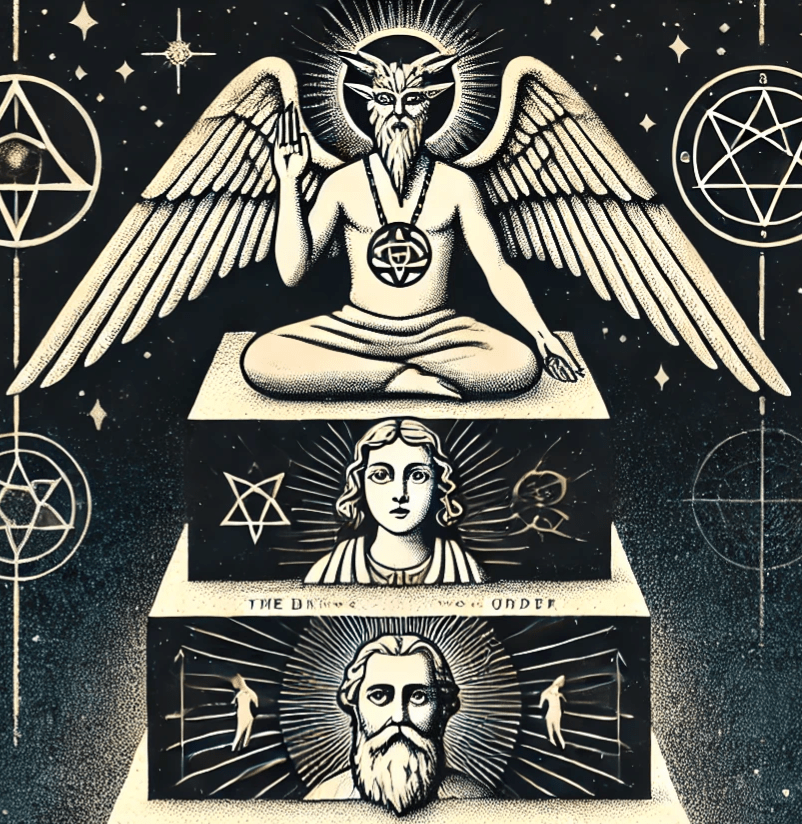
As Paul writes in 1 Timothy 2:13–14:
“For Adam was formed first, then Eve. And Adam was not deceived, but the woman being deceived, fell into transgression.”
The result is a reversal of spiritual headship, a collapse of authority, and the introduction of sin into the world through disordered desire and misplaced allegiance.
3. Choosing a New Head
By listening to the serpent, the woman spiritually chose a new god. She acted outside the counsel of both God and the man. In so doing, she severed her unity with both and submitted to the words of one who rebelled against divine authority. This is reflected in the prophetic language of Israel’s unfaithfulness:
“Surely, as a wife treacherously departs from her husband, so have you dealt treacherously with Me.” (Jeremiah 3:20)
Her action was not merely disobedience—it was spiritual adultery. She broke faith, embraced a lie, and entangled herself in a counterfeit covenant.
4. Desire’s Consequence: Genesis 3:16
“Your desire shall be for your husband, and he shall rule over you.”
This “desire” is not affectionate longing—it echoes Genesis 4:7 where sin’s desire is to dominate. Her act of taking spiritual headship results in a fallen nature and order in which she will now seek to rule, yet be ruled. The symmetry of divine harmony has collapsed.
5. Implications for the Seventh Commandment
Thus, the roots of adultery reach deep into Eden:
- The woman’s misplaced desire represents spiritual unfaithfulness.
- The woman now is now the medium through which the fallen Angel will bring Adam under the fallen Angel’s rule through the woman.
- The serpent’s seduction mirrors the deceiver’s role in the disruption of society and later prophetic texts.
- The fall is the archetypal breakdown of covenant, trust, and created roles.
To guard against adultery is, therefore, to guard against the very spirit that first fractured paradise. It is to resist false allegiances, to remain loyal in covenant, and to uphold the divine structure established from the beginning.
This spiritual reading of the Fall expands the Seventh Commandment into cosmic scope: it is not only a protection of marriage but a call to uphold God’s original design and to remain faithful to His voice and His creation order.
X. Pornography and the Spirit of the Seventh Word
Though not named in Scripture, pornography falls directly under the moral and spiritual scope of the Seventh Commandment—”You shall not commit adultery”—especially as that commandment is extended by rabbinic and New Testament teachings to include inner purity, visual lust, and covenantal fidelity.
1. Adultery of the Eyes and Heart
Jesus said:
“But I say to you that everyone who looks at a woman with lustful intent has already committed adultery with her in his heart.” (Matthew 5:28)
Pornography encourages this very act: looking in order to lust. It is an act of mental and spiritual adultery, forming a covenant of desire not with a person, but with an image—an illusion detached from relationship, holiness, or responsibility.
2. Rabbinic View on Visual Lust
The Talmud teaches:
“Whoever looks even at the little finger of a woman with the intention of deriving pleasure—it is as if he has transgressed.” (Avodah Zarah 20b)
This reflects the rabbinic principle of hirhur aveirah—“thoughts of transgression”—which the Midrash considers even more damaging than the act itself (Midrash Tanchuma, Vayishlach 7).
Pornography trains the soul to desire sin, detach sex from covenant, and treat the body as a commodity rather than as a bearer of divine image.
3. Porneia in the New Testament
The Greek word porneia (πορνεία)—from which “pornography” derives—includes:
- Adultery
- Fornication
- Prostitution
- Lustful desire
It covers all forms of sexual sin, including those of the imagination, making pornography a clear violation of the moral thrust of the Seventh Word.
“Flee from sexual immorality… your body is a temple of the Holy Spirit.” (1 Corinthians 6:18–19)
4. Desecrating the Image of God
Pornography violates the image of God in multiple ways:
- In the viewer – by corrupting the mind and soul
- In the participants – by reducing human beings to instruments of lust
- In society – by normalizing exploitation and perversion
What is meant to be sacred becomes profaned, and what is meant to be shared in covenant becomes consumed in isolation.
5. Covenant Faithfulness and Sexual Sanctity
To honor the Seventh Commandment is not just to avoid the physical act of adultery, but to guard the heart, discipline the eyes, and resist counterfeit intimacy. Pornography is a modern expression of ancient porneia—a desecration of sexual holiness that corrupts love, distorts desire, and undermines covenant.
It is a silent destroyer of marriages, a thief of joy, and a teacher of lies. As such, it falls under the spirit of the Seventh Word and must be opposed with the same seriousness as physical infidelity.
“Blessed are the pure in heart, for they shall see God.” (Matthew 5:8)
XI. Why the Seventh Commandment Is Directed Toward Men
A recurring question arises when studying the Seventh Commandment: why does the prohibition against adultery—and the broader condemnation of porneia—seem primarily directed toward men? The answer lies in the theological, covenantal, and cultural frameworks of Scripture, where men are consistently positioned as covenantal representatives and spiritual heads. This emphasis is not about male exclusivity in sin, but about male responsibility in leadership, accountability, and headship.
1. Covenant Headship and Male Responsibility
From the beginning, man is given covenantal headship—not as dominance, but as spiritual stewardship.
- Genesis 2:15 – The man is placed in the garden to “guard and keep it.”
- Genesis 3:9 – After the fall, God calls to Adam: “Where are you?” even though the Woman sinned first.
- Romans 5:12 – Sin enters the world through “one man,” not through the woman.
In this pattern, laws and prohibitions often address men first because they are held accountable first. The Seventh Word, then, functions not just as a moral restraint but as a covenantal charge to the one who bears headship.
2. Legal and Cultural Structures in Torah
In the Torah, adultery (na’af) is defined as sexual relations between a man and another man’s wife. The offense lies in violating the husband’s covenant. While both parties are guilty, the law frames the act as a violation initiated by the man.
This reflects the patriarchal structure of biblical society. The emphasis on male conduct does not absolve women but underscores the male as initiator and covenant-bearer, responsible for protecting marital boundaries.
3. Jesus’ Radical Refocus on the Male Gaze
In the New Testament, Jesus intensifies the moral call by focusing on the male heart:
“Whoever looks at a woman to lust after her has already committed adultery with her in his heart.” (Matthew 5:28)
This moves the conversation from external conduct to internal responsibility. Jesus:
- Places full moral burden on the man
- Rejects blaming women for men’s desire
- Calls men to guard their own thoughts, intentions, and eyes
4. Rabbinic Acknowledgement of Male Temptation
The Talmud and rabbinic literature also reflect concern over the male tendency to initiate sexual transgression:
- Avodah Zarah 20b – “He who looks at a woman’s little finger with intent has sinned.”
- Hirhur aveirah (thoughts of transgression) are considered spiritually dangerous
Even in patriarchal formulations, men are charged with policing their own impulses—not blaming women.
5. Theological Symbolism of Male Headship
Scripture often casts God as Husband and Israel as Bride (Isaiah 54:5; Hosea 2; Revelation 19). In this typology:
- The man symbolizes covenantal initiative and faithfulness
- The woman symbolizes the receptive covenant partner
Therefore, when a man commits adultery or indulges in porneia, he desecrates the image of God’s covenantal role, violating not only a human relationship but a divine archetype.
✨ Summary Table
| Reason | Description |
| Covenant Headship | Man is held first in creation and covenantal accountability |
| Legal Structure | Adultery defined in Torah as a violation of another man’s marriage covenant |
| Jesus’ Ethics | Directs moral responsibility toward the man’s eyes, heart, and thoughts |
| Rabbinic Tradition | Emphasizes male control over lust and moral initiative |
| Theological Typology | Man represents divine headship; sin distorts God’s covenantal image |
In all of this, the focus on men does not suggest women are guiltless or less capable of sin. Rather, it reflects a spiritual principle: those given headship are held first in accountability. The Seventh Commandment speaks first to men, not because women are invisible, but because men are responsible.
One important and often overlooked dimension of the Decalogue is that the commandments are delivered grammatically and structurally to men. Every imperative in the Ten Words is in the masculine singular form:
Interlude: The Masculine Address of the Commandments
- לֹא תִנְאָף (You [masc. sing.] shall not commit adultery)
- לֹא תִרְצָח (You [masc. sing.] shall not murder)
- לֹא תִגְנֹב (You [masc. sing.] shall not steal)
This is not incidental. In the world of ancient Israel, men were the covenantal representatives—the ones called to assemble, receive, and transmit the Word of God. This reflects the biblical pattern of headship and accountability:
- At Sinai, the elders and heads of tribes—primarily men—were called to stand before the mountain (Exodus 19:10–15).
- In the covenantal structure, the man bore responsibility not only for himself, but also for his household.
- Women were included in the covenant, but not directly addressed as initiators or heads—rather, they participated through covenantal union with their fathers, husbands, or communities.
This masculine address echoes the pattern of Genesis:
- God gave the command regarding the tree of knowledge to Adam before the woman was formed (Genesis 2:16–17)
- When the fall occurred, God called to the man (Genesis 3:9) even though the woman had eaten first
- Paul later affirms: “Through one man sin entered the world” (Romans 5:12)
Thus, the masculine form of the commandments is not cultural oversight—it is covenantal design. The man is addressed first because he is held first in responsibility.
This reinforces the moral urgency of the Seventh Word: It is primarily directed to the man as the one who initiates covenantal union, who must guard the boundaries of fidelity, and who bears spiritual and societal accountability for protecting the sanctity of the relationship.
XII. Postlude: The Weight of Fidelity
The Seventh Word—“You shall not commit adultery”—is not simply a prohibition; it is a call to covenantal faithfulness, relational integrity, and moral responsibility rooted in the very structure of creation. From the Garden of Eden to the giving of the Torah, from prophetic cries against harlotry to Jesus’ teaching on the heart, the theme of faithfulness echoes through Scripture as a defining attribute of both divine and human love.
Adultery is more than physical betrayal—it is a spiritual rupture:
- It violates trust and desecrates covenant.
- It mirrors the original infidelity of Eden, where desire and deception overturned divine order.
- It echoes Israel’s unfaithfulness to God, portrayed so vividly in the prophets.
Pornography, lust, seduction, emotional infidelity, and even immodest speech are all spiritual extensions of this same breach. They pollute the soul, distort love, and sever the sacred threads that bind us to God and to one another.
The masculine address of the commandment reinforces the burden of responsibility placed on those entrusted with headship, initiation, covering and protection. The man, as covenantal representative, is charged with guarding the boundary of love, upholding the dignity of his partner, and reflecting the faithfulness of God Himself.
Ultimately, to keep the Seventh Word is to:
- Cherish the image of God in every person
- Honor the sanctity of marriage and sexual union
- Preserve and maintain the divine order of creation and the covenant it reflects
- Resist every form of counterfeit intimacy and spiritual betrayal
This commandment, like the others, is not merely law—it is light. It exposes the hidden places of the heart, summons us to higher love, and draws us back to the One who is ever faithful. For just as God says to His people, “I will betroth you to Me forever” (Hosea 2:19), so too are we called to lives marked by loyalty, purity, and covenantal love.
To honor the Seventh Word is to bear witness to that divine fidelity in every relationship, with heart, body, and soul.
“Blessed are the pure in heart, for they shall see God.” (Matthew 5:8)
 Ask The Teacher
Your voice matters. Iron sharpens iron. What insights or questions do you bring to the table?