
A Necessary Complication When The Story Is Only Half Told: The Missing Role Of The Jewish Community – Assessing the Historical Claims in “Seeds of Separation (Parts I-IV)
The paper “Seeds of Separation” narrative of separation, while compelling in its moral clarity, suffers from a significant historical omission. It tells the story of the parting of the ways as a one-directional departure: a faithful, Torah-observant community was abandoned by an apostate, Gentile Church that then turned hostile. This account rightly highlights the real and painful developments of later centuries, including the rise of anti-Jewish rhetoric among certain Church Fathers and the institutional hostility that followed. Yet a historically responsible retelling requires more than a single vantage point.
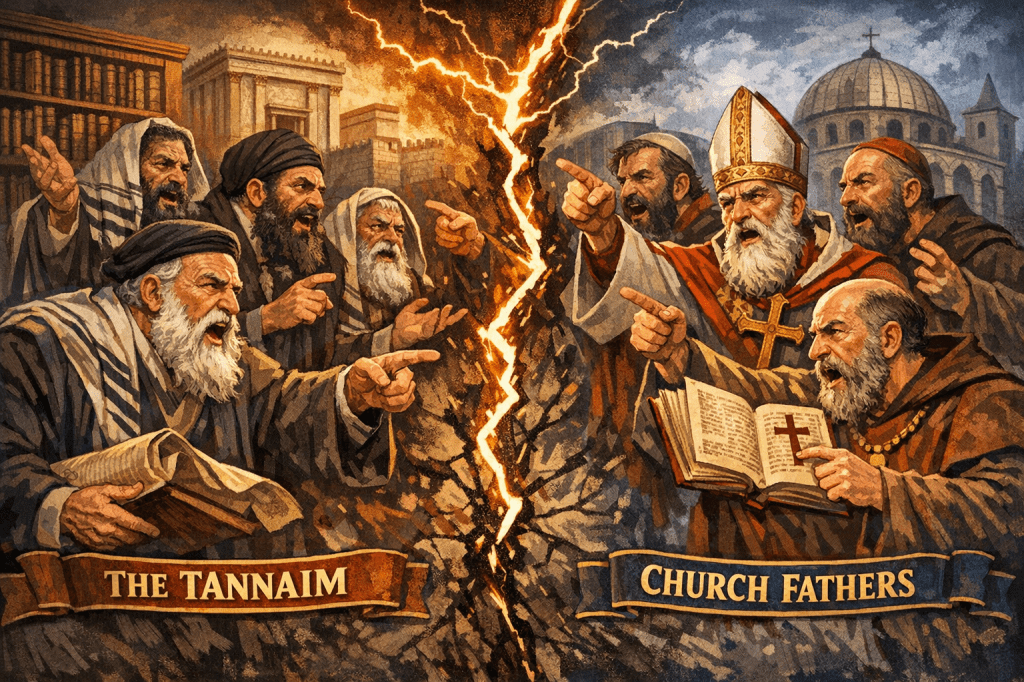
The “parting of the ways” was not a simple story of Christian abandonment. It was a long, uneven, and reciprocal process in which both communities—rabbinic Judaism and the growing Gentile Church—made decisions that widened the distance between them. In several key respects, the earliest formal steps toward separation originated within the Jewish community itself.
From a historical‑critical standpoint, “Seeds of Separation” is strongest when it names the later, well‑documented rise of Christian anti‑Judaism—but it is weakest where it implies that the rupture began and moved in only one direction. The distance between Judaism and the Christ‑movement did not appear overnight, nor was it produced by a single act of Gentile rejection. It emerged through decades of contested identity, crisis management, and boundary‑setting on both sides as rabbinic leadership and an increasingly Gentile Church clarified who was “in” and who was “out.” And in the earliest stages, some of the most concrete institutional pressures that forced differentiation were generated from within Jewish communal life itself.
The Apostolic Jewish Movement: A Voice Within a Diverse Chorus
The paper “Seeds of Separation” correctly emphasizes that the earliest followers of Yeshua were fully Jewish. They were rooted in Torah, synagogue life, and the covenantal rhythms of Israel. The book of Acts portrays them as a legitimate Jewish sect—the Nazarenes—who understood themselves as participating in Israel’s story rather than departing from it. Their faith represented a Jewish interpretation of Israel’s hope, not a rejection of Judaism or of Israel, the Jewish people then, or anytime.
However, it is crucial to remember that first-century Judaism was not a single, monolithic entity. It was a vibrant and often contentious ecosystem. Pharisees, Sadducees, Boethusians, Samaritans, Essenes, Zealots, apocalyptic groups, and diverse diaspora communities all embodied different and distinct expressions of Jewish life, and they frequently disagreed with one another. The early Yeshua movement, often referred to as the Nazarenes” (Ναζωραῖοι / Nazōraioi) in Acts 24:5, was one voice among many within this broader landscape (Paul was a Pharisee in the school of Hillel). Its presence was not inherently a cause for separation. Still, its claims about a crucified and resurrected Messiah were, from the perspective of other Jewish groups, a point of deep theological contention.
The Birkat ha‑Minim and Rabbinic Boundary‑Making
The destruction of the Second Temple in 70 CE was a catastrophic trauma that reshaped the Jewish world for both Apostolic and Rabbinic Jews. It marked a decisive turning point. In the aftermath, Jewish leaders gathered at Yavneh with a singular, urgent purpose: to rebuild Jewish communal life and define the contours of a post-Temple Judaism that could survive.
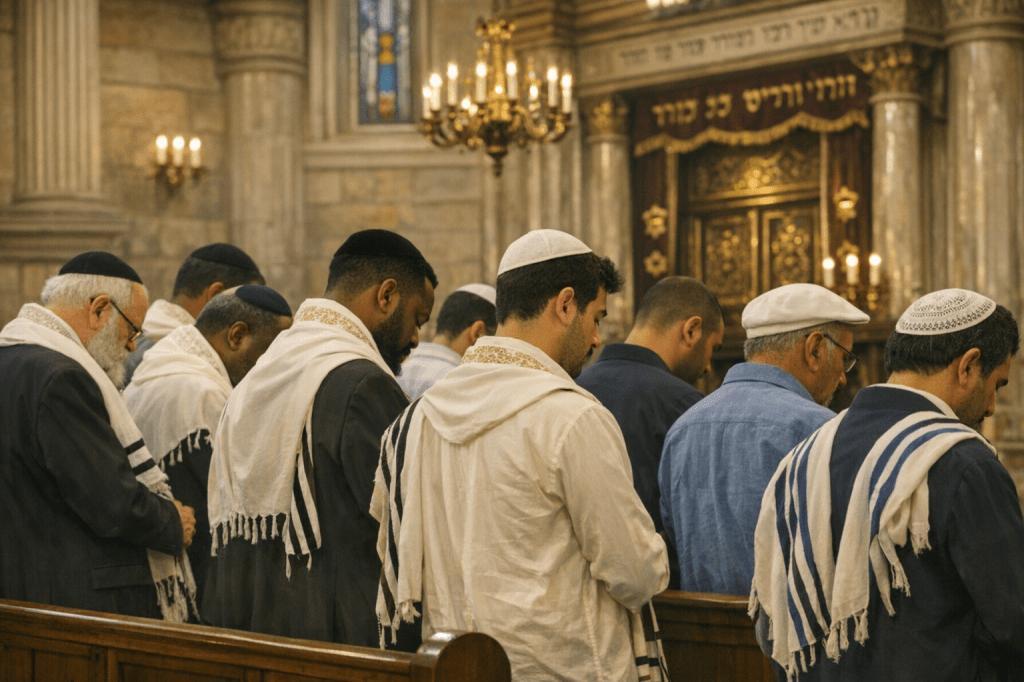
In the Amidah – the standing prayer. In this context of crisis and consolidation, the rabbis introduced a new benediction into the daily Amidah (the central prayer of Jewish liturgy): the birkat ha-minim, or “blessing concerning the heretics.” This was, in effect, a curse directed at those deemed deviant from the community.
Historical evidence strongly suggests that Jewish followers of Yeshua were included among the minim targeted by this prayer.
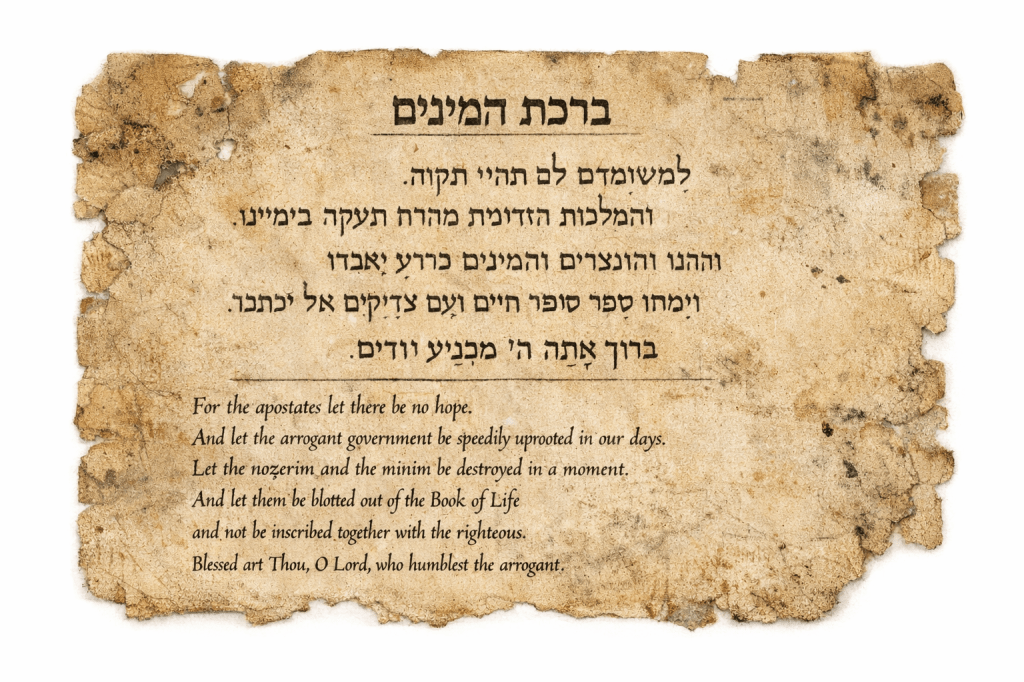
The earliest recoverable Birkat ha‑Minim explicitly curses the “Noẓerim” (Nazarenes/Christians) and “minim” (heretics), asking God to erase them from the Book of Life and uproot their influence.
This addition was not a minor liturgical detail. It functioned as a powerful mechanism of communal boundary-making. A person could not recite a curse against themselves and remain within the community. The birkat ha-minim served as a liturgical test of loyalty and identity, effectively making it impossible for Yeshua-believing Jews to participate fully in synagogue life. This represents the earliest documented, institutionalized act of separation between the nascent Yeshua movement and the broader Jewish community—and it emerged from within the Jewish community itself. It was a move driven not by simple malice, but by the urgent need to preserve communal cohesion and theological clarity in a time of existential crisis. Nevertheless, it marked a decisive, and Jewish-led, step in the divergence between the two groups.
Mutual Suspicion and Parallel Identity Formation
This historical reality does not excuse or diminish the later anti-Jewish rhetoric of certain Church Fathers like John Chrysostom or the violent consequences of supersessionist theology. Those developments are historically undeniable and morally troubling. However, they did not arise in a vacuum. They were part of a centuries-long, spiraling dynamic of mutual suspicion and parallel identity formation. Yet these polemics did not arise in isolation.
By the late first and early second centuries, a complex web of factors was at work:
– Jewish authorities viewed the growing Yeshua movement, increasingly Gentile in composition and distinct in its claims, as destabilizing to a communal identity already under immense pressure from Rome.
– Yeshua-believing Jews found themselves formally excluded from synagogues. Yeshua‑believers were excluded from synagogues through liturgical and communal mechanisms like the birkat ha-minim and increasingly marginalized within their own people.
– Rabbinic Judaism was consolidating its authority, defining orthodoxy, and building a future without the Temple, a project that necessarily involved drawing clear lines of demarcation.
– Gentile Jesus believers, for their part, were increasingly distancing themselves from Jewish identity and practice, partly to avoid Roman suspicion in the wake of the Jewish revolts, and partly because their own theological understanding, shaped by leaders like Paul, was evolving.
– Both communities interpreted the cataclysmic destruction of the Temple in 70 CE through their own theological lenses. For the rabbis, it was a summons to prayer, study, and internal purification. For the Apostolic Jews, the Nazarenes and Gentile Jesus believers (later called Christians), it became a retroactive claim of divine judgment against Jerusalem and Israel. This theological framing would later fuel supersessionist narratives. Yet Jesus and the apostles did not teach that God rejected Israel or that Israel was condemned for rejecting Jesus. Rather, they warned that Jerusalem’s downfall would come as a covenantal judgment for longstanding violence, corruption, and failure to heed prophetic calls to repentance. It was not the end of Israel’s story, but a painful reckoning within it.
The separation was therefore reciprocal, a tragic and complex dance in which each step by one community prompted a counterstep from the other. It was shaped by competing visions of covenant, identity, and survival, all unfolding under the crushing pressure of the Roman Empire.
The Pressure of Empire
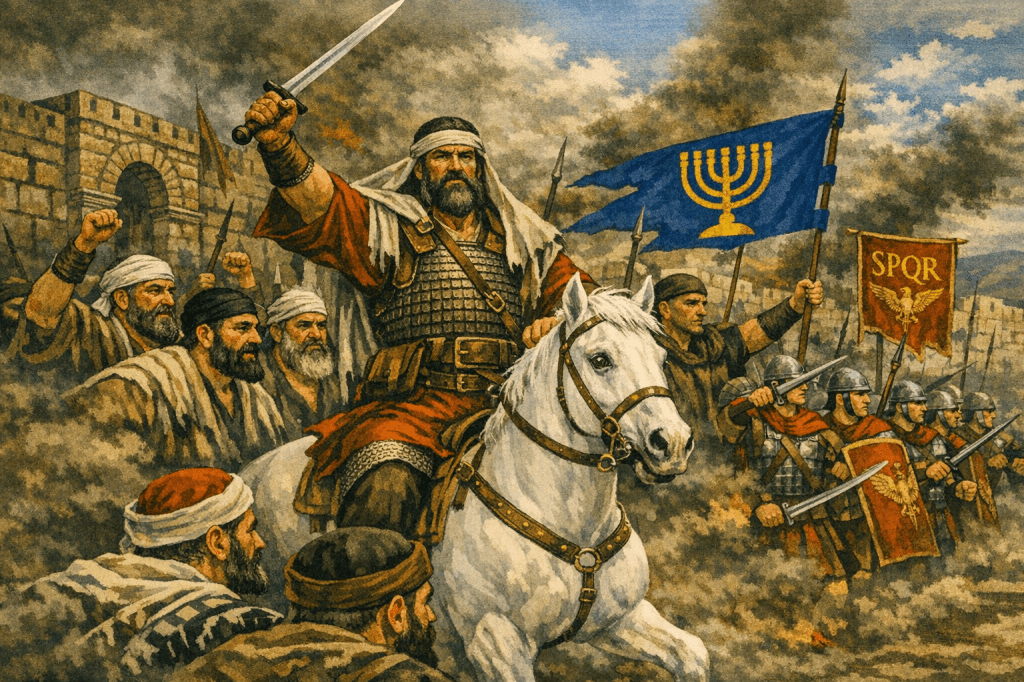
The Jewish revolts against Rome (66–70 CE and 132–135 CE) were seismic events that profoundly reshaped the religious landscape. After the Bar Kokhba revolt, Rome outlawed many Jewish practices, renamed the province of Judea to Syria Palaestina in an attempt to erase Jewish connection to the land, and scattered Jewish communities across the empire.
In this environment of intense persecution and dislocation:
– Gentile Jesus believers – many of whom were already negotiating their relationship to Israel and the Jewish people—found themselves under new pressure in the aftermath of Rome’s suppression of Jewish revolts. As Roman suspicion hardened into open hostility toward Jews, Gentile Jesus believers who formally as a part of the Roman Imperial Cult enjoyed the protections of Roman citizenship had a powerful incentive to distance themselves from a community now regarded as seditious and accursed. This political reality contributed significantly to the widening separation between the two groups.
– Jewish leaders – having just witnessed the catastrophic failure of a second messianic claimant (Simon bar Kokhba)- became even more determined to protect communal survival by rejecting any new messianic movements that could invite further Roman retribution.
– The Apostolic Jews, the sect of the Nazarenes, found themselves caught in an impossible position – a “Catch-22”: viewed with suspicion by Rome as potential Jewish subversives, and formally excluded by the rabbinic community as heretics.
These pressures did not create the separation, but they accelerated it dramatically, hardening the boundaries that had been erected on both sides.
Based on the historical sources, here are the key ways the Bar Kokhba Revolt drove the parting of the ways:
1. The Messianic Conflict: A Line in the Sand
The most immediate and irreconcilable conflict was theological. Simon Bar Kokhba was acclaimed as the Messiah by one of the most prominent rabbis of the age, Rabbi Akiva. For the majority of Jews, this messianic fervor fueled the revolt against Rome. For Jewish believers in Jesus (Nazarenes), this was impossible. They had already identified Jesus as the Messiah and could not transfer that allegiance to another claimant.
– The Consequence – the Nazarenes refused to fight in the revolt. This refusal was almost certainly viewed by their fellow Jews as an act of national and religious betrayal. According to later Church tradition, this may have led to active persecution of the Nazarenes by Bar Kokhba’s forces. The revolt thus transformed theological disagreement into a tangible conflict of loyalties, marking the Nazarenes (Apostolic Jews) as disloyal to the nation’s cause.
2. The Catastrophic Aftermath: Demographic and Geographic Rupture
The Roman response to the revolt was brutally effective and permanently reshaped the Jewish landscape.
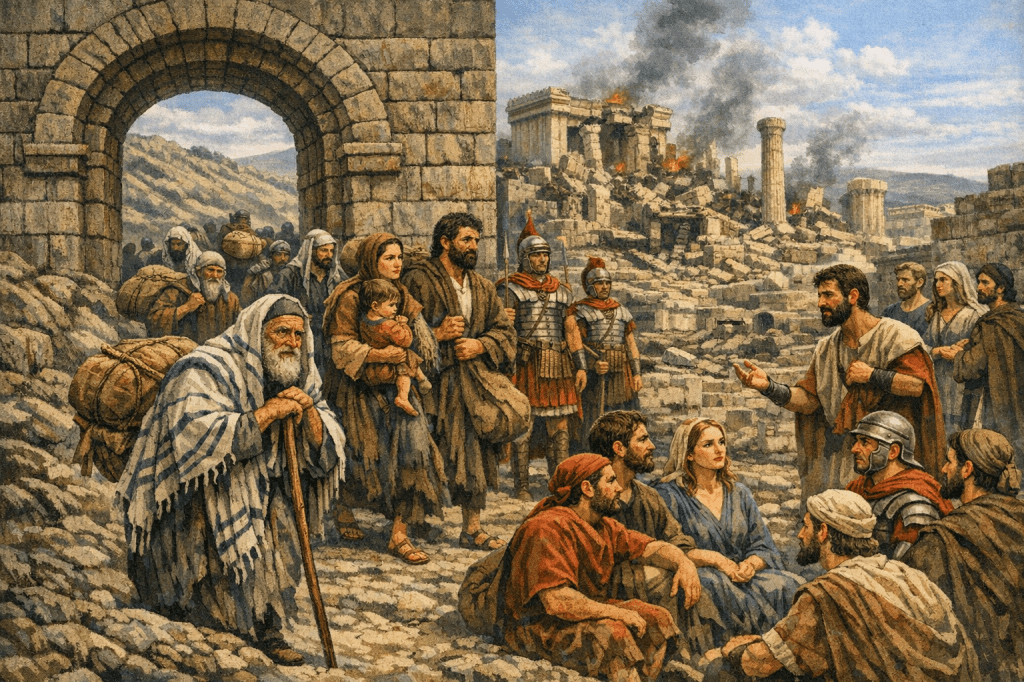
– Expulsion from Jerusalem – After crushing the revolt, Emperor Hadrian leveled Jerusalem and rebuilt it as a pagan city called Aelia Capitolina. Jews, including the Nazarenes, were forbidden from entering the city on pain of death. This was a catastrophic blow. The Jerusalem Church, which had been the mother Church and a bastion of the Apostolic Jewish community, had fled to Pella before the war. Now, with the ban in place, it could never return. The leadership of the Church in Jerusalem passed to Gentile bishops, and the character of the Nazarene community in the Land of Israel became predominantly Gentile.
– Prohibition of Circumcision – Hadrian’s ban on circumcision had a real impact politically: it criminalized a core marker of Jewish identity at a time when Rome already viewed Jews with deep suspicion after the revolts. By outlawing circumcision as “mutilation,” Rome intensified the stigma surrounding Jews and rendered anyone associated with them—especially the Jewish Nazarenes—socially radioactive. The separation that followed was not about halakhic controversy but about the harsh social consequences of being linked to a people Rome now regarded as dangerous and disgraced.
– Decimation of Judean Jewry: The Jewish population of Judea was devastated and never fully recovered its pre-war strength. The center of Jewish life shifted from Jerusalem and Judea to the Galilee. This physical removal of the Jewish center of gravity severed the geographical and demographic ties that had connected the Jewish Christian movement to its homeland and its people.
3. Redefining Identity: From Jewish Sect to Separate Religion
Before the revolt, the rabbis (the tannaim) could still view the followers of Jesus as a Jewish sect, even if a problematic one. The events of 132–135 CE permanently changed this perception.
– The End of Ambiguity – after the war, the rabbis were no longer dealing with “Jews who had gone astray.” They were confronting “Gentiles who had converted to a religion which had rejected circumcision, the Jewish law of conversion, and the requirements of life under the halakhah”. The Christians who now dominated the movement were, from a rabbinic perspective, Gentiles. They had not undergone a valid conversion, and their community actively rejected the core practices that defined Jewish identity. Therefore, the rabbis began to treat Nazarenes not as a heretical Jewish sect, but as a separate and hostile religious community. The revolt also accelerated separation. Gentile Christians had powerful political incentives to distance themselves from a people who had just been crushed by Rome as rebels. The disaster was also interpreted theologically: some Christians saw the destruction of Jerusalem and the expulsion of Jews as divine confirmation that the Jewish people had been rejected for their unbelief. This view would harden into supersessionism. This interpretation, found in early Church Fathers, would not have been possible without the historical trauma of the revolt.
Summary: The Revolt as the Great Accelerator
The birkat ha-minim (the curse against heretics added to synagogue liturgy decades earlier) had begun the process of exclusion from within. The Bar Kokhba Revolt completed it from without. It was the revolt that:
– Created an irreconcilable messianic conflict.
– Physically severed Jewish Christians from Jerusalem and their leadership.
– Criminalized the Torah’s defining command (circumcision).
– Devastated the Jewish population that formed the natural context for the Jewish Christian movement.
– Forced both rabbinic Judaism and Gentile Christianity to redefine themselves as separate entities, no longer two branches of a shared, if troubled, tree.
These events provided the grounds for later polemic and apologetic justification for the break as it developed. They were not the first causes of tension, but they were the events that made the separation final and irreversible.
The Church Fathers recognized the Nazarenes as a Jewish sect, but they did not meaningfully differentiate them from Gentile Christians who adopted Jewish practices. In patristic writings, anyone who maintained Torah observance—whether by birth or by choice—was folded into the same polemical category of “Judaizers.” The Fathers’ concern was not the origin of the practices but their proximity to Judaism, which they increasingly defined as a theological and social boundary to be avoided.
Because of this, the Nazarenes received no protection from the stigma attached to Judaism in the post‑revolt Roman world. Rather than distinguishing Jewish followers of Jesus from Gentile imitators, the Fathers treated both as deviations from the emerging Gentile Christian norm. In effect, the Nazarenes were swept into the same dismissive judgments directed at Gentile Judaizers, their Jewish identity rendering them even more suspect in a context where association with Judaism carried political danger and social disgrace.
A More Complete Account
A balanced historical-critical account, therefore, must affirm several truths simultaneously:
– The apostolic Jewish movement remained deeply rooted in Torah and Jewish communal life for generations, as the paper “Seeds of Separation” correctly argues.
– Anti-Jewish rhetoric and later Christian institutional hostility played a significant and tragic role in widening the chasm and creating a legacy of persecution.
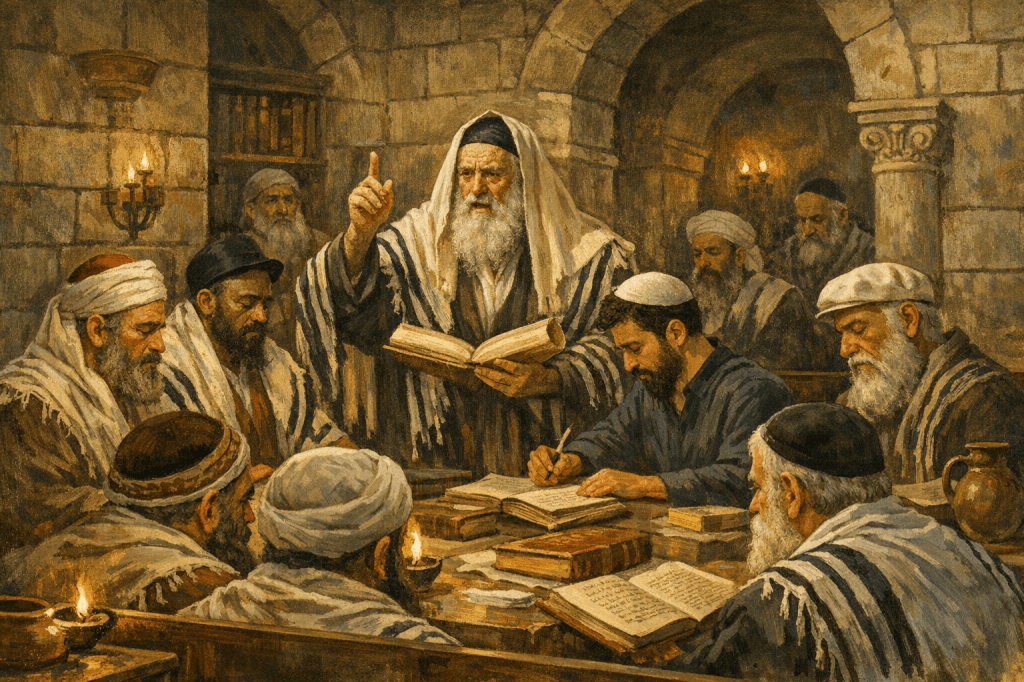
– Jewish authorities also actively shaped the separation, particularly through the birkat ha-minim and the boundary-making efforts of Yavneh, as they sought to define and preserve Jewish identity in a time of crisis.
– The parting of the ways was not a single event but a centuries-long, reciprocal process shaped by trauma, theology, identity formation, and the overwhelming pressures of empire.
To tell only the story of Christian departure is to tell an incomplete story. It is to assign blame rather than to understand history. To tell both sides—to acknowledge the decisions made within both communities—is to honor the full, painful complexity of the people who lived it. And it is to recognize that the path toward genuine reconciliation must begin with a truthful and humble account of the past, in all its tragic, two-sided complexity.
The Bar Kokhba Revolt (132–135 CE) played a decisive, multifaceted role in finalizing the separation between Judaism and the early Christian movement. Far from being a mere background event, it served as the catalyst that transformed what had been a gradual, complex divergence into an irreversible schism. The revolt created a series of political, demographic, and theological pressures that made continued coexistence within a single community untenable.
– Solidifying Christian Identity: From the Nazarene side, the revolt also accelerated separation. Gentile Christians had powerful political incentives to distance themselves from a people who had just been crushed by Rome as rebels. The disaster was also interpreted theologically: some Christians saw the destruction of Jerusalem and the expulsion of Jews as divine confirmation that the Jewish people had been rejected for their unbelief. This view would harden into supersessionism. This interpretation, found in early Church Fathers, would not have been possible without the historical trauma of the revolt.
RETHINKING “Seeds of Separation” THE PARTING OF THE WAYS – Part 2
 Ask The Teacher
Your voice matters. Iron sharpens iron. What insights or questions do you bring to the table?