
A Cadillac mechanic cannot tell a Ford mechanic how to understand and interpret a Ford manual.
Someone asked a question about Matthew 21:43
WHERE IN MATTHEW 21:43 DOES IT HINT THAT IT’S TALKING ABOUT A DIFFERENT NATION [OTHER THAN ISRAEL] AND NOT A DIFFERENT GENERATION?
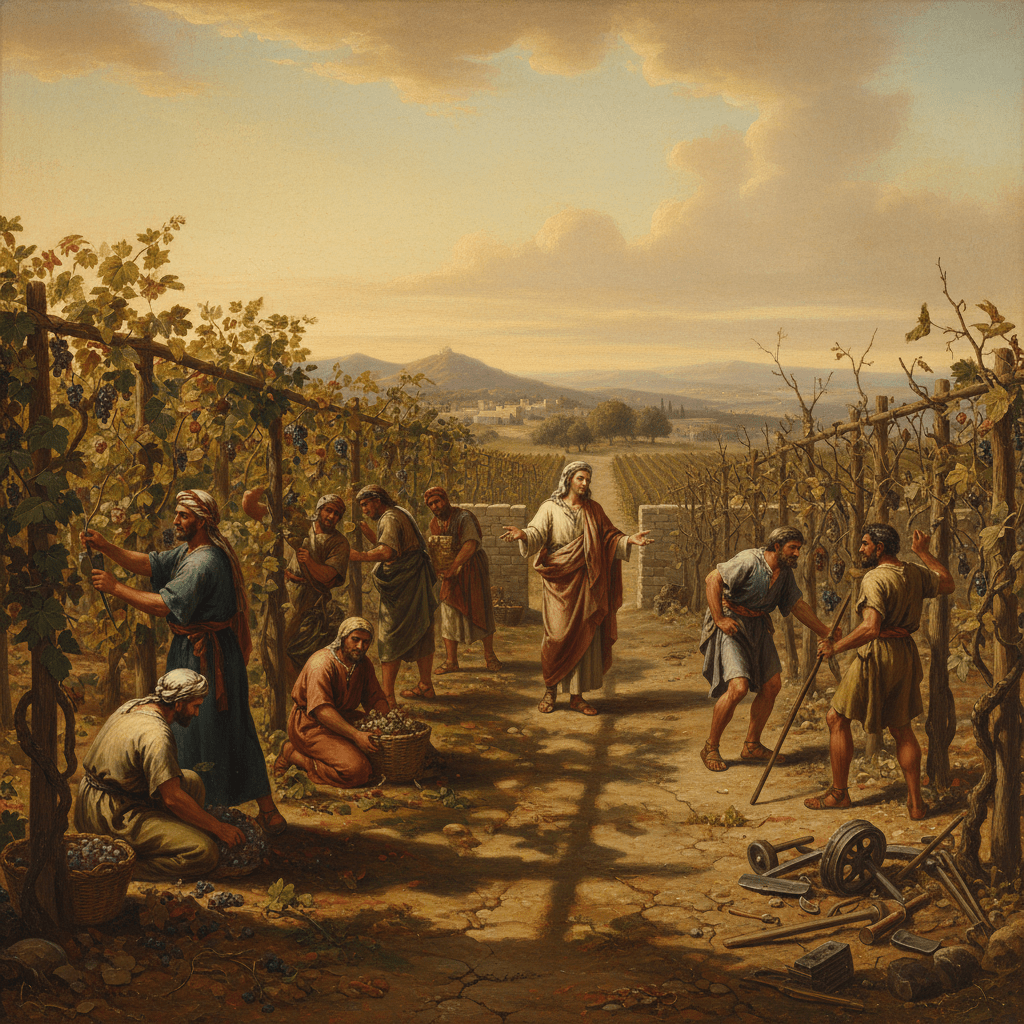
That is actually a very perceptive question, because it goes straight to the heart of how the Gospel of Matthew 21:43 has been interpreted historically.
The verse reads:
“Therefore I tell you, the kingdom of God will be taken away from you and given to a nation producing its fruits.” (Matthew 21:43)
The key issue is the Greek word translated “nation.”
1. The Greek Word Does Not Necessarily Mean a “Different” Nation
The Greek word is ἔθνος (ethnos).
While the Greek word ethnos is often translated “nation” or “Gentiles,” it does not automatically mean a different ethnic people replacing Israel. Nothing in the language of Matthew 21:43 demands that interpretation. The claim that Jesus meant the kingdom would be taken from Israel and given to another nation that replaces the Jewish people is not an obvious reading of the text—it is a theological construction. And it is not a recent one. It was cultivated and popularized by generations of Church Fathers whose writings were saturated with hostility toward Jews and Judaism.
From those early centuries onward, a supersessionist narrative took shape: the Church, it was claimed, had displaced Israel; the Jewish people had been cast off; the covenant had been transferred. This doctrine—born in the soil of anti-Jewish polemic—was passed down through centuries of Christian teaching and continues to be repeated and defended today with remarkable confidence. Many who promote it appear unaware that they are echoing the same interpretive tradition that fueled the harsh invective of figures like Martin Luther, whose writings against the Jews were so venomous that later generations would find them easily adaptable to modern antisemitism.
Nor has this interpretive hostility been confined to one religious tradition. Similar claims that God has rejected Israel and transferred His favor elsewhere appear in other religious polemics as well, where the Jewish people are portrayed as a nation abandoned, cursed, or superseded. Yet these assertions—whether voiced in Christian or Muslim rhetoric—reveal more about the interpreters than about the text itself. They expose a long-standing impulse to erase Israel from the biblical narrative while simultaneously appropriating Israel’s Scriptures, prophets, and Messiah.
The irony is striking: the same communities that claim the authority of the Hebrew Scriptures often build entire theological systems upon the assumption that the very people through whom those Scriptures were given have been permanently displaced. Such interpretations are not demanded by the text; they are inherited from centuries of polemical tradition. And until those traditions are confronted and reexamined, the reading of passages like Matthew 21:43 will continue to be shaped less by careful exegesis than by the lingering echo of ancient hostility toward the Jewish people.
A closer reading of the text itself further undermines the “replacement nation” interpretation. Linguistically, the Greek word ethnos in Matthew 21:43 does not require the meaning “another ethnic nation replacing Israel.” In the Greek Scriptures (Septuagint), Israel itself is repeatedly called an ethnos—most notably in the Book of Exodus 19:6, where Israel is described as a “holy nation.” The word simply denotes a people or community and does not inherently signify a Gentile body supplanting the Jews. Contextually, Jesus’ statement appears at the conclusion of the parable of the vineyard tenants, which is itself drawn from the Book of Isaiah 5:1–7. In that prophetic imagery the vineyard represents Israel, the owner is God, and the tenants represent Israel’s leaders. Crucially, the vineyard is not destroyed or transferred to another vineyard; rather, the wicked tenants are removed and replaced with others who will faithfully produce fruit. The structure of the parable therefore points not to the replacement of Israel as a people, but to the judgment of corrupt leadership and the entrusting of God’s kingdom to a faithful remnant who will bear its fruits. This interpretation is confirmed by the narrative itself, for the chief priests and Pharisees immediately recognized that Jesus was speaking about them (Matthew 21:45). The text therefore indicts a generation of unfaithful leaders, not the covenant people of Israel. To read it as the permanent displacement of the Jewish nation requires importing a later theological agenda into the passage—an agenda the language and context of the text do not support.
So ἔθνος (ethnos) can mean:
- a people
- a community
- a body of people defined by shared identity
In the Greek Old Testament (LXX), Israel itself is repeatedly called an ethnos.
For example:
“You shall be to me a holy nation (ἔθνος ἅγιον).”
— Book of Exodus 19:6 (LXX)
So linguistically, ethnos can refer to Israel itself.
This alone makes the supersessionist reading far less certain.
2. The Immediate Context Shows Jesus Is Addressing Leaders
The parable just before the verse is the parable of the wicked tenants.
In it:
| Element | Meaning |
| Vineyard | Israel |
| Owner | God |
| Tenants | Religious leadership |
| Servants | Prophets |
| Son | Messiah |
The vineyard remains the same vineyard.
What changes are the tenants.
So the parable itself suggests:
leadership replacement, not national replacement.
3. The Audience Recognized He Was Speaking About Them
Immediately after the parable we read:
“When the chief priests and Pharisees heard his parables, they perceived that he was speaking about them.”
— Gospel of Matthew 21:45
They understood the target was:
- the priestly authorities
- the ruling leadership
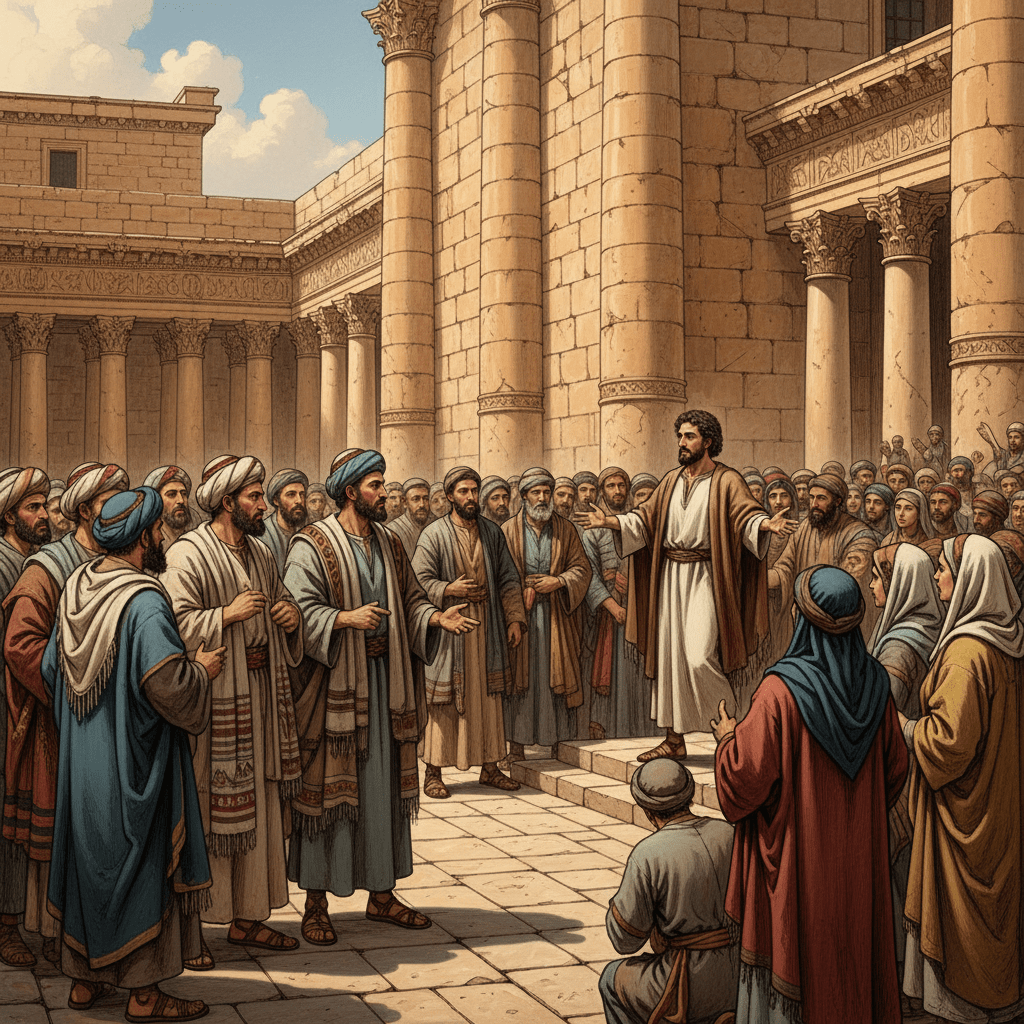
Not the entire Jewish nation or the nation of Israel.
4. Matthew’s Gospel Already Uses “Generation” Language for Judgment
Elsewhere Jesus speaks about a corrupt generation rather than the nation itself.
For example:
“This generation will be held responsible…”
— Gospel of Matthew 23:36
And:
“An evil and adulterous generation seeks a sign.”
— Matthew 12:39
This pattern shows Jesus often condemns a particular generation of leadership, not Israel as a people.
5. The Apostolic Interpretation Rejects the Idea That Israel Was Replaced
Later the apostle Paul addresses the issue directly:
“Has God rejected His people? By no means!”
— Epistle to the Romans 11:1
And:
“The gifts and the calling of God are irrevocable.”
— Romans 11:29
If Matthew 21:43 truly meant that Israel had been permanently replaced by another nation—whether understood as the Gentile Church or some foreign people—then the apostle Paul’s later statements would stand in direct contradiction to Jesus. In Epistle to the Romans 11:1, Paul raises the very question that supersessionist interpretations inevitably provoke: “Has God rejected His people?” His answer is emphatic: “By no means!” He reiterates the same principle later in the chapter, declaring that “the gifts and the calling of God are irrevocable” (Romans 11:29). If Jesus had already announced the permanent displacement of Israel in Matthew 21:43, Paul’s argument in Romans 9–11 would not merely be difficult—it would be impossible. The apostle would be openly contradicting the very Messiah he proclaims.
Some theologians have attempted to resolve this tension by suggesting that Paul was mistaken—that he misunderstood the implications of Jesus’ teaching and continued to hope for a future restoration of Israel that Jesus himself had supposedly ruled out. But this explanation creates an even greater problem. For it would mean that Paul was not alone in this misunderstanding.
According to this line of reasoning, the disciples themselves, after more than three years of hearing Jesus teach, preach, and explain the kingdom of God, also fundamentally misunderstood him. For the last recorded question they ask Jesus before his ascension is this:
“Lord, will you at this time restore the kingdom to Israel?”
— Acts of the Apostles 1:6
If Jesus had already taught that Israel was permanently rejected and that the kingdom would instead be given to another nation replacing Israel, then the disciples’ question would reveal a profound failure to grasp his message even after years of direct instruction.
Yet Jesus does not rebuke them for expecting the restoration of Israel. He does not say, “Israel will not be restored,” or “the kingdom now belongs to another nation.” Instead, he simply answers:
“It is not for you to know the times or seasons which the Father has fixed by His own authority.” (Acts 1:7)
The expectation of Israel’s restoration is therefore not corrected, only the timing is withheld.
This is a crucial point. If Jesus had intended to teach that Israel’s national role in God’s purposes had ended, Acts 1:6 would have been the perfect moment to say so. Instead, the narrative moves forward with the assumption that Israel’s restoration remains part of the divine plan, even if its timing is unknown.
Thus the supersessionist interpretation forces an implausible conclusion: that Jesus taught Israel’s replacement, yet both his closest disciples and his greatest apostle failed to understand him. A far more coherent reading is that Jesus never taught the abolition of Israel in the first place. Matthew 21:43 addresses the removal of unfaithful leadership and the entrusting of the kingdom to those who will bear its fruits, not the cancellation of God’s covenant with the people of Israel.
The supersessionist reading therefore requires us to believe that both the apostles and Paul fundamentally misunderstood Jesus. A far more coherent conclusion is that they did not misunderstand him at all: Gospel of Matthew 21:43 speaks of the removal of unfaithful leaders and the transfer of stewardship to those who will bear fruit—not the abolition of Israel or the replacement of the Jewish people in God’s covenantal purposes.
6. A Stronger Interpretation
Many scholars therefore understand Matthew 21:43 to mean:
The kingdom will be taken from the corrupt leadership of Israel and given to a faithful community that produces fruit.
That community initially consisted of:
- Jesus’ Jewish disciples
- the apostolic leadership
- the faithful remnant of Israel
Later Gentiles are included, but the covenant people themselves are not replaced.
7. Why Supersessionists Read It as “Another Nation”
The replacement interpretation arose later when:
- The church became predominantly Gentile.
- Jewish followers of Jesus became a minority.
- Christian theologians reinterpreted Israel’s promises spiritually.
This historical shift influenced how the verse was read.
Nothing in Matthew 21:43 explicitly states that the kingdom would be given to a different ethnic nation replacing Israel.
The verse can just as easily—and more consistently with the context—refer to:
- a different leadership
- a faithful remnant
- or a renewed community within Israel that produces fruit
So the question asked at the beginning of this essay is quite legitimate.
The text itself does not clearly say another nation replaces Israel.
It simply says the kingdom will be given to a people who produce its fruits.
WHY CONTEXT IS SO IMPORTANT
Matthew actually gives a subtle clue two chapters later that Israel itself is still expected to receive the Messiah.
Most people completely miss it. In the same narrative, Israel is not permanently rejected and that the Messiah is still expected to be received by Israel in the future in Jesus’ lament over Jerusalem.
7. The Overlooked Clue in Matthew’s Gospel
After the vineyard parable and the statement in Gospel of Matthew 21:43, Jesus pronounces judgment on the corrupt leadership of Jerusalem. But when he concludes his discourse in Matthew 23, he says something remarkable:
“For I tell you, you will not see me again until you say,
‘Blessed is he who comes in the name of the Lord.’”
— Matthew 23:39
This statement is crucial.
The Meaning of the Phrase Jesus Quotes
The phrase Jesus cites comes from:
“Blessed is he who comes in the name of the LORD.”
— Book of Psalms 118:26
This is the same psalm Jesus quoted earlier when he referred to the rejected cornerstone (Psalm 118:22).
Psalm 118 is a messianic welcome psalm, used in pilgrimage liturgy when the king or deliverer entered Jerusalem.
Earlier in Matthew, the crowds had already used this phrase during the triumphal entry:
“Hosanna to the Son of David!
Blessed is he who comes in the name of the Lord!”
— Gospel of Matthew 21:9
But Jesus now says something different.
The Word “Until”
Jesus declares:
“You will not see me again until you say…”
The word “until” is decisive.
It implies:
- Israel will not see him for a period.
- But there will come a time when they will say this.
- When that happens, they will see him again.
So the statement contains a future expectation.
Jerusalem’s rejection is temporary, not final.
Why This Matters for the Supersessionism Debate
If Jesus had just announced in Matthew 21:43 that Israel was permanently replaced by another nation, then Matthew 23:39 would make no sense.
Because Jesus is clearly anticipating a future moment when Jerusalem welcomes him as Messiah.
That expectation assumes:
- Jerusalem still exists in God’s plan.
- Israel will one day acknowledge him.
- The messianic relationship between Israel and its king is not abolished.
Matthew’s Narrative Logic
Notice the sequence Matthew constructs:
| Passage | Event |
| Matthew 21 | Leaders reject the Son |
| Matthew 21:43 | Kingdom stewardship taken from corrupt leadership |
| Matthew 23 | Judgment pronounced on Jerusalem |
| Matthew 23:39 | Future acceptance predicted |
Matthew’s narrative therefore moves from rejection → judgment → future recognition.
Not replacement.
The Prophetic Background
Jesus’ statement echoes prophetic restoration texts like:
“They shall look upon me whom they have pierced.”
— Book of Zechariah 12:10
And:
“All Israel shall be saved.”
— Epistle to the Romans 11:26
Both anticipate a future national turning.
The Implication
Matthew himself quietly undermines the supersessionist reading.
Jesus does not say:
- Israel will never see him again.
He says:
- Israel will not see him until they welcome him.
The door is left open.
And that single word “until” preserves the future of Israel in the Gospel narrative.
The Conclusion
The subtle clue in Matthew is this:
Two chapters after the supposed “replacement verse,” Jesus predicts that Jerusalem itself will one day welcome him as Messiah.
That expectation is incompatible with the idea that Israel has been permanently replaced.
Instead, Matthew presents a pattern consistent with the Hebrew prophets:
rejection → judgment → eventual restoration.
And most readers miss it because they stop reading the argument too early.
There is a striking feature at the very end of Matthew’s Gospel that quietly undermines the idea that Israel has been replaced. It is something many interpreters overlook because they read the conclusion only through the lens of the “Great Commission.” But when the narrative structure is followed carefully, Israel remains at the center of the story even in the final scene.
8. The Gospel Begins and Ends in Israel
Matthew frames his entire Gospel with Israel.
It begins with:
- the genealogy of Jesus as “son of David, son of Abraham” (Matthew 1:1)
- the story of Israel’s Messiah
- fulfillment of Israel’s Scriptures
And it ends in the same place.
After the resurrection, the disciples are told:
“Go tell my brothers to go to Galilee, and there they will see me.”
— Gospel of Matthew 28:10
The final meeting with the risen Messiah therefore occurs not in Rome, not among Gentiles, but in the land of Israel.
This geographic framing matters. Matthew deliberately keeps the center of gravity inside Israel’s story.
9. The Audience of the Great Commission
In the final passage Jesus says:
“Go therefore and make disciples of all nations.”
— Matthew 28:19
The Greek phrase is πάντα τὰ ἔθνη (panta ta ethnē).
Ironically, the same word ethnē used here is the one often used by supersessionists in Matthew 21:43 to argue that Israel was replaced by the nations.
But in Matthew 28 the meaning is clear:
Israel is the sending people; the nations are the mission field.
The direction of movement is outward from Israel, not replacement of Israel.
10. The Disciples Represent Israel
Another subtle detail is easy to miss.
The commission is given to the eleven disciples.
Throughout Matthew these disciples function symbolically as the restored leadership of Israel.
Their number originally corresponds to the twelve tribes.
This mirrors Jesus’ earlier promise:
“You who have followed me will sit on twelve thrones judging the twelve tribes of Israel.”
— Gospel of Matthew 19:28
So the final scene depicts something profound:
Israel’s Messiah sending Israel’s representatives to the nations.
This is exactly the prophetic role Israel was always meant to fulfill.
11. The Mission Fulfills Israel’s Calling
The mission to the nations was not a new idea replacing Israel.
It was already part of Israel’s prophetic destiny.
For example:
“I will make you a light to the nations.”
— Book of Isaiah 49:6
Matthew therefore portrays the Gospel mission not as Israel being replaced, but as Israel’s mission finally expanding.
12. The Narrative Logic
When Matthew’s Gospel is read as a whole, the pattern becomes clear:
| Stage | Theme |
| Matthew 1 | Messiah comes from Israel |
| Matthew 5–7 | Torah given through Israel’s Messiah |
| Matthew 10 | Mission first to Israel |
| Matthew 21 | Corrupt leadership judged |
| Matthew 23 | Jerusalem will one day welcome him |
| Matthew 28 | Israel’s disciples sent to the nations |
Israel never disappears from the story.
Instead, the narrative shows renewed Israel becoming the instrument through which the nations are reached.
13. Why This Is Devastating to Supersessionism
Supersessionism assumes this sequence:
Israel → rejected → replaced by the Church.
But Matthew’s Gospel actually presents a different sequence:
Israel → judged → renewed → sent to the nations.
The nations are added to Israel’s story, not substituted for it.
14. The Final Irony
The very Gospel that is most frequently used to argue that Israel has been replaced actually ends with:
- Israel’s Messiah
- Israel’s land
- Israel’s representatives
- Israel’s mission
still at the center of the narrative.
Far from erasing Israel, Matthew closes his Gospel by reaffirming Israel’s role in the unfolding plan of God.
And that is the subtle but powerful detail many interpreters miss when they read Matthew only through later theological assumptions rather than through the narrative logic of the text itself. That can only happen when a Cadillac mechanic thinks he can teach a Ford manual better than a Ford mechanic.
A Cadillac mechanic cannot tell a Ford mechanic how to understand and interpret a Ford manual.
 Ask The Teacher
Your voice matters. Iron sharpens iron. What insights or questions do you bring to the table?