
THE FIFTH WORD – REPRESENTS A POINT OF DIVISION AND TRANSITION WITHIN THE TEN WORDS
Jewish Tradition: Five and Five Division
Part One: The Fifth Commandment as a Divine Obligation
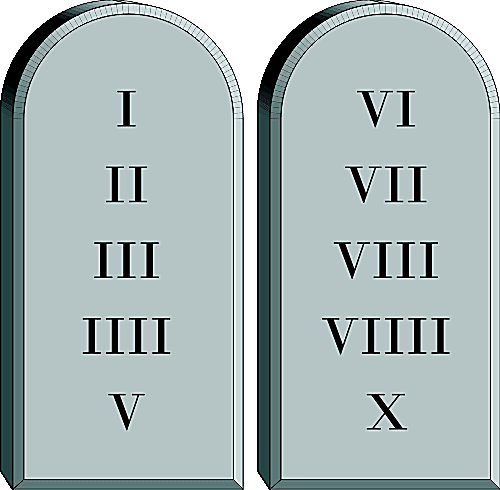
In Jewish tradition, the Ten Words are typically divided as five on each tablet:
- The first five focus on man’s relationship with God (bein adam laMakom).
- The last five focus on man’s relationship with fellow humans (bein adam lechaveiro).
How Do We Know This?
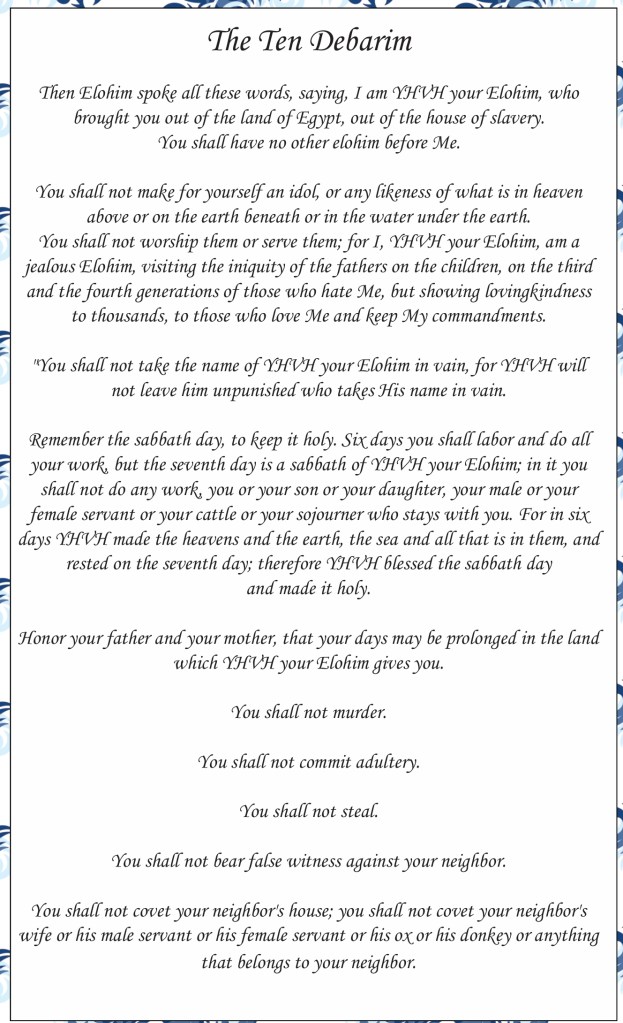
- The Name of God Appears in the First Five Only
- The first five commandments explicitly mention God’s name (YHWH), reinforcing their divine focus:
- “I am the Lord your God…” (Exodus 20:2)
- “You shall have no other gods before Me.” (Exodus 20:3)
- “You shall not take the name of the Lord your God in vain.” (Exodus 20:7)
- “Remember the Sabbath day to sanctify it…” (Exodus 20:8)
- “Honor your father and mother, that your days may be long upon the land which the Lord your God is giving you.” (Exodus 20:12)
- The last five (murder, adultery, theft, false testimony, coveting) do not mention God’s name.
- The first five commandments explicitly mention God’s name (YHWH), reinforcing their divine focus:
- The Fifth Word (Honor Parents) is on the “YHVH” Tablet
- Honoring parents is traditionally understood as part of man’s obligation to God, because:
- Parents are partners with God in creation (Kiddushin 30b).
- Respecting parental authority reflects respect for divine authority.
- Honoring parents is traditionally understood as part of man’s obligation to God, because:
- Symmetry in the Tablets
- Rabbinic tradition teaches that the tablets were of equal content, suggesting that both contained five words each.
- The Midrash (Shemot Rabbah 28:4) explains that the Ten Words were inscribed in parallel, possibly appearing on two copies of the full text (as treaties in the ancient Near East often had two copies—one for each party).
2. Christian Interpretations: Variability in Division
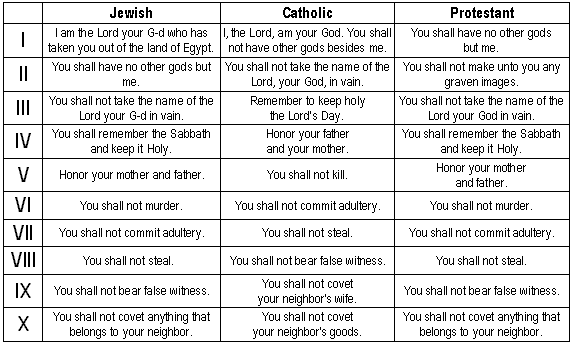
Christian traditions differ in how they divide the Ten Words across the Two Tablets:
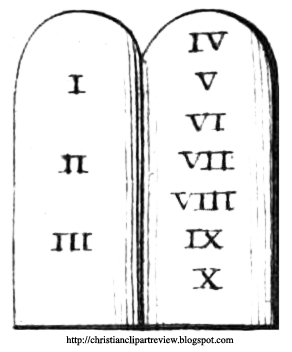
- Catholic & Lutheran Tradition
- The first tablet contains three commandments:
- Belief in God
- No idols
- No misuse of God’s name
- The second tablet contains seven commandments:
- Sabbath
- Honor parents
- No murder, adultery, theft, false testimony, coveting.
- This division is based on Augustinian teaching, emphasizing worship in the first tablet.
- The first tablet contains three commandments:
- Protestant (Reformed) Tradition
- The first tablet contains four commandments:
- Belief in God
- No idols
- No misuse of God’s name
- Sabbath observance
- The second tablet contains six commandments (human ethics).
- The first tablet contains four commandments:

2. Jewish Tradition: Five and Five
- Five divine commandments (mentioning God’s name).
- Five ethical commandments (human obligations).
- Rationale: The parallelism between divine and human laws strengthens the holistic unity of Torah, showing that human ethics are rooted in divine obligation.
3. Conclusion: The Textual Integrity of the Jewish Division of the Ten Words
‘The Jewish division of five on each tablet is more textually and theologically grounded because:
- It aligns with the invocation of the Divine Name in the first five words.
- It follows the Jewish concept of mitzvot being either God-centered or human-centered.
- The Talmud and Midrash confirm this division.
- The honoring of parents is viewed as a religious duty, not just a social one.
- Calling them the Decalogue (Ten Words) reflects the Jewish understanding that these are divine pronouncements forming the covenantal foundation of Torah.
- Calling them the Ten Commandments reflects the Christian tendency to emphasize them as standalone moral laws, sometimes separated from the rest of Torah.
- These linguistic and theological differences impact how Jews and Christians interpret, teach, and apply these foundational words of revelation.
- This division emphasizes the unity of law, where human relationships are rooted in divine instruction. Unlike some Christian traditions that treat the moral and religious commandments separately, the Jewish approach sees them as interconnected—human ethics are an extension of divine law.
Strengthening the Case: Rabbinic Interpretations and Apostolic Jewish Writings
The idea that honoring one’s parents is not merely a social duty but a divine principle that preserves the Jewish people is deeply rooted in rabbinic thought. Additionally, the New Testament also reflects this understanding, preserving the Jewish cultural perspective. Let’s explore both:
1. Rabbinic Perspectives on the Fifth Commandment
Parents as Partners with God
- As mentioned earlier, the Talmud (Kiddushin 30b) states: “There are three partners in the creation of a person: God, the father, and the mother. When a person honors his parents, God considers it as if He dwells among them and they honor Him.”
- This teaching elevates honoring parents beyond a social duty—it becomes an act of honoring God Himself.
- Since God is eternal, honoring one’s parents is part of honoring something beyond time, reinforcing its role in the survival of Jewish identity.
Commandment Without Limits: As Long as You Live
- Ramban (Nachmanides) on Deuteronomy 5:16: Ramban explains that the commandment does not end with the physical life of one’s parents. Instead, it includes upholding their memory, continuing their values, and passing them down to the next generation.
- The Mishnah (Pirkei Avot 1:1) states: “Moses received the Torah at Sinai and transmitted it to Joshua, and Joshua to the Elders, and the Elders to the Prophets, and the Prophets transmitted it to the Men of the Great Assembly.”
- This passage emphasizes continuity through honoring the wisdom and traditions of one’s predecessors, which is directly tied to the commandment to honor parents.
- Jewish existence is not just a function of laws but of transmission—generation to generation. This is why Judaism, unlike many ancient civilizations, has never become a relic of history.
The Link Between Honoring Parents and the Sabbath
- Leviticus 19:3 states: “Every one of you shall revere his mother and his father, and you shall keep My Sabbaths: I am the LORD your God.”
- Rashi comments that the juxtaposition teaches that honoring one’s parents must not override the Sabbath, meaning that reverence for parents is immense but still subject to God’s commandments.
- But another layer of meaning is that both commandments preserve Jewish identity—Sabbath keeps Israel as a distinct people, and honoring parents keeps Jewish lineage and traditions alive across generations.
2. Early Apostolic Teachings Reflections on the Fifth Commandment
While early Apostolic writings also recognized honoring parents as a divine duty, not just a social one.
- Ephesians 6:2-3 (Paul): “Honor your father and mother”—which is the first commandment with a promise—”so that it may go well with you and that you may enjoy long life on the earth.”
- Paul upholds the Jewish understanding that this commandment is tied to divine blessing and long-term survival.
- Mark 7:9-13 / Matthew 15:3-6: Jesus rebukes those who neglect honoring their parents under the pretense of religious offerings.
- This shows that even within early Apostolic teachings, honoring parents was not simply a human duty but a sacred responsibility.
These passages from the writings of Apostolic Judaism affirm the traditional Jewish emphasis on honoring parents as a divine principle essential to life.
Part Two: The Fifth Commandment as the Key to Jewish Continuity and Survival
Honoring Parents as a Lifelong and Generational Command
- The commandment does not say, “Honor your parents while they live.” It simply commands, “Honor your father and mother.” The absence of temporal limitations implies that this duty continues as long as the child lives.
- Jewish traditions, such as yahrzeit (memorial observances), Kaddish (prayers that honor God’s name and merit for the deceased), and visiting graves, illustrate how the commandment to honor one’s parents and ancestors continues to be upheld even after their passing.
- Unlike many cultures where ancestors are merely revered, in Judaism, they are remembered, honored, and their teachings carried forward in daily life.
Honoring the Past to Preserve the Future
- In Jewish thought, the past is never truly past—it is carried forward in every generation. Honoring one’s parents means preserving their memory, their wisdom, their Torah, and their sacrifices.
- The Torah emphasizes remembrance: “Remember the days of old, consider the years of many generations” (Deuteronomy 32:7). This principle ensures Jewish survival because to forget one’s parents and ancestors is to sever the link to identity.
- This is why Jewish children are taught not only Torah but also the stories of their grandparents and great-grandparents, ensuring that each generation remains tied to its roots.
The Contrast: Other Nations Forgotten, Israel Endures
- History has seen the rise and fall of many civilizations—Babylon, Greece, Rome—yet Israel remains.
- This endurance is not due to military power or wealth but to the unbroken transmission of identity, largely through the commandment to honor parents.
- Other nations have collapsed when they disconnected from their traditions, but Israel, through Torah and the mitzvah of honoring parents, has remained a “nation that dwells alone” (Numbers 23:9), carrying its past into the future.
Conclusion: The Fifth Commandment as the Pillar of Jewish Eternity
Who knew how powerful, pervasive, and extensive the fifth commandment truly is? It is not just an ethical directive—it is the secret of Jewish continuity. The duty to honor parents:
- Preserves Jewish wisdom and identity from generation to generation.
- Extends beyond life, ensuring that Jewish values are never lost.
- Is linked with the Sabbath, another key to Jewish survival.
- Is the reason why Israel is still here, while so many ancient peoples have disappeared.
By honoring parents, the Jewish people honor their past, ensuring that their faith and identity are never lost in the shifting sands of history. This mitzvah embodies the entire principle of “L’dor v’dor” (from generation to generation), ensuring that the chain of Jewish existence remains unbroken.
The Fifth Commandment: Honoring Parents as a Theological Duty is on the First Tablet as Part of Man’s Obligation to God.
Honoring parents is part of one’s duty to God, not merely a social or ethical obligation toward other humans. This underscores the Jewish enumeration of the Ten Commandments, in which the first five commandments belong to the category of obligations toward God.
Building the Case: The Fifth Commandment as a Duty to God
- The Placement of the Commandment on the First Tablet
- The Jewish tradition divides the Ten Commandments into two groups: duties toward God (first tablet) and duties toward fellow humans (second tablet). The fifth commandment, “Honor your father and your mother, so that your days may be long upon the land that the LORD your God is giving you” (Exodus 20:12, Deut. 5:16), is placed with commandments that explicitly relate to God—belief in Him, prohibitions against idolatry, taking His name in vain, and keeping the Sabbath.
- Since the first tablet pertains to divine obligations, this suggests that honoring parents is more than a social responsibility—it is a theological and spiritual duty.
- Parents as Representatives of God (Elohim)
- In the Torah, parents are closely associated with God’s authority. The Hebrew Bible sometimes refers to human judges or authorities as Elohim (Exodus 22:8-9), signifying that they wield a delegated divine authority. Similarly, parents, as the givers of life, serve as God’s representatives in the family.
- The Talmud (Kiddushin 30b) states that there are three partners in the creation of a person: God, the father, and the mother. Since God participates in the creation of life, honoring one’s parents is an extension of honoring God.
- Leviticus 19:3 commands: “Every one of you shall revere his mother and his father, and you shall keep My Sabbaths: I am the LORD your God.” The juxtaposition of revering parents and keeping the Sabbath suggests that just as the Sabbath is a sign of God’s covenant, so too is honoring one’s parents an act of divine recognition.
- Theological Significance: Authority and Divine Order
- The commandment links parental authority with divine authority. Disobedience to parents in the Torah is seen as rebellion against the divine order (Deuteronomy 21:18-21).
- Proverbs 1:8-9: “Hear, my son, your father’s instruction, and do not forsake your mother’s teaching. For they are a graceful garland for your head and pendants for your neck.” The wisdom literature presents parental guidance as part of divine wisdom, reinforcing the connection between honoring parents and following God’s will.
- The Promise of Long Life in the Land
- The commandment uniquely includes a promise: “that your days may be long upon the land.” This covenantal blessing ties honoring parents directly to divine reward and national destiny, further elevating it beyond human ethical considerations into the realm of divine decree.
- In contrast, breaking this commandment is linked with exile and destruction (Deut. 27:16, Proverbs 20:20). This covenantal aspect aligns with the other commandments on the first tablet, which dictate Israel’s relationship with God.
- Echoes in the New Testament
- While many Christians view the fifth commandment as a social duty, the New Testament affirms its divine significance. In Ephesians 6:1-3, Paul reinforces the connection between honoring parents and receiving divine blessing, reflecting its status as a theological command.
- Jesus Himself rebukes the Pharisees for allowing traditions that undermine parental honor, equating obedience to parents with obedience to God (Mark 7:9-13, Matthew 15:3-6).
Conclusion: Why This Matters
For Christians, understanding the fifth commandment as a duty to God challenges a common perception that limits it to human ethics. Instead, it reveals the depth of divine order in human relationships. Honoring parents is not merely about respect but about recognizing their God-given role, upholding the structure through which God manifests His authority, and fulfilling a sacred obligation that aligns with covenantal faithfulness.
The Fifth Commandment as the Key to Jewish Survival
1. The Secret of Jewish Continuity: Honoring Parents as the Pillar of Jewish Survival
1. The Historical Role of Honoring Parents in Jewish Survival
Jewish history is marked by an extraordinary emphasis on family structure and intergenerational transmission of values. The Fifth Commandment—“Honor your father and your mother, so that your days may be long upon the land which the LORD your God is giving you” (Exodus 20:12)—serves as the foundation for Jewish continuity.
- Commandment with a Promise: Unlike other mitzvot, this commandment comes with a divine promise of longevity, both on a personal and national level. Historically, Jewish survival has depended on a strong link between generations, where the wisdom, faith, and traditions of parents are passed down to children.
- Cultural Continuity: Honoring parents is more than a social or moral principle—it is a mechanism that has ensured the unbroken transmission of Jewish knowledge, values, and identity, even in exile and persecution.
- Resilience in Diaspora: In times of forced migration, expulsion, and oppression, Jewish families relied on the respect for parental wisdom and experience to maintain their faith and customs, reinforcing communal strength.
- Statute of Limitations: The commandment is not limited to the lifetime of one’s parents but extends throughout one’s own lifetime. The promise of longevity upon the land applies “as long as you shall live,” underscoring that honoring one’s parents is a lifelong obligation with enduring spiritual and communal consequences beyond their years.
2. Rabbinic Perspectives on Intergenerational Transmission
Rabbinic tradition elevates the role of parents beyond mere biological progenitors. They are seen as partners with God in creation (Talmud, Kiddushin 30b), and their honor is intrinsically tied to divine service.
- Transmission of Torah: The Mishnah (Pirkei Avot 1:1) states: “Moses received the Torah at Sinai and transmitted it to Joshua, Joshua to the Elders, the Elders to the Prophets, and the Prophets transmitted it to the Men of the Great Assembly.” This pattern of passing down wisdom from generation to generation is the essence of Jewish identity.
- Respecting Parents as a Reflection of Divine Authority: The commandment to honor one’s parents is listed in the first tablet of the Decalogue, which concerns duties to God. This placement signifies that respecting one’s parents is a theological duty, not just a social or ethical obligation.
- Honoring Parents Beyond Life: Jewish customs, such as reciting Kaddish and observing yahrzeit, reflect the belief that honoring parents continues even after they pass away, further reinforcing the idea that Jewish continuity depends on intergenerational memory.
3. How Jewish Identity Has Endured Through Family Structure
While many ancient civilizations have vanished, Judaism has survived because it prioritizes the transmission of faith, law, and identity through the family.
- Education Begins at Home: The Shema (Deuteronomy 6:4-9) instructs Jewish parents to “teach these words diligently to your children”, emphasizing that Jewish education starts in the household.
- Family as a Mini-Sanctuary: The home is often called a mikdash me’at (a small sanctuary), where Jewish traditions—Shabbat, holiday observances, and ethical teachings—are preserved.
- Parental Example: The way parents model their faith, discipline, and kindness profoundly impacts their children, ensuring the continuity of Jewish values.
Conclusion: The Fifth Commandment as the Key to Jewish Longevity
Honoring parents is not just about respect—it is about sustaining Jewish identity across generations. This commandment has ensured:
- The preservation of Jewish wisdom and Torah learning.
- The endurance of Jewish values despite persecution and exile.
- The survival of the Jewish people as a distinct nation while other ancient civilizations have disappeared.
By upholding this divine principle, Judaism continues to thrive l’dor v’dor—from generation to generation.
Part Three: The Secret of Jewish Continuity: Honoring Parents as The Pillar of Jewish Survival
The endurance of the Jewish people throughout history is one of the most remarkable phenomena in human civilization. Despite persecution, exile, and dispersion, Jewish identity has remained intact. What is the secret behind this continuity? One of the most profound answers lies in the Fifth Commandment: “Honor your father and your mother, so that your days may be long upon the land which the LORD your God is giving you” (Exodus 20:12). More than a mere social or ethical principle, this commandment serves as the bedrock of Jewish survival, ensuring the transmission of faith, identity, and values from one generation to the next.
1. The Historical Role of Honoring Parents in Jewish Survival
Jewish history is marked by a deep commitment to familial and communal continuity. The Fifth Commandment is unique in that it carries an explicit promise—longevity in the land. This is not only a personal blessing but a national one; the continued existence of Israel depends on the transmission of its identity through honoring parents and ancestors.
A. The Family as the Core of Jewish Life
From the biblical era to modern times, the Jewish home has been the nucleus of identity and tradition. Unlike many ancient civilizations that relied on political or military structures, Judaism has always placed the family at the center of its survival strategy.
- The Patriarchal Model: The biblical narratives of Abraham, Isaac, and Jacob emphasize familial continuity.
- Education as a Family Duty: The Shema (Deuteronomy 6:4-9) commands Jewish parents to teach their children the ways of Torah, ensuring faith is passed down l’dor v’dor (from generation to generation).
- The Role of the Jewish Mother and Father: Jewish law (Halakha) assigns the father the responsibility of teaching Torah to his children (Kiddushin 29a), while the mother shapes the spiritual and ethical environment of the home (Proverbs 1:8).
B. Jewish Continuity in Exile and Persecution
Throughout history, Jews have been uprooted and scattered, yet they have survived as a people. The commandment to honor parents has played a critical role in this endurance.
- Spanish Inquisition & Conversos: Many Jewish families maintained their traditions in secret, passing down Torah knowledge despite forced conversions.
- The Holocaust & Post-Holocaust Rebuilding: Survivors emphasized Jewish education and remembrance, ensuring that their children and grandchildren carried forward Jewish heritage.
- Soviet Jewry: In Communist Russia, where Jewish practice was outlawed, parents secretly taught their children Hebrew and Torah, keeping Jewish identity alive.
2. Rabbinic Perspectives on Intergenerational Transmission
Jewish sages and scholars have long emphasized the connection between honoring parents and national survival. The commandment is not simply about respect but about preserving the divine structure of the world.
A. Parents as Representatives of God
The Talmud (Kiddushin 30b) states: “There are three partners in the creation of a person: God, the father, and the mother. When a person honors his parents, God considers it as if He dwells among them and they honor Him.”
This teaching elevates parents to a place of significant honor, even associating them with the divine role. Honoring parents is beyond a social duty—it becomes an act of honoring God Himself. Since God is eternal, honoring one’s parents connects an individual to an unbroken chain of divine partnership. In Jewish tradition, this commandment has often been understood as placing parents in a quasi-divine position. Why? Because, like God, parents are co-creators of life and are entrusted with raising their children in righteousness. Moreover, in Psalm 82, where the term Elohim is used to describe judges or rulers, it’s worth noting that some Jewish interpretations link this use of Elohim to figures of authority and guidance—roles that align with a parent’s position in the family structure. While parents aren’t equated with deities, their role carries a divine weight in shaping and guiding life.
B. Honoring Parents Beyond Life
Unlike other cultures where respect for parents ends at death, Judaism teaches that honoring parents continues indefinitely:
- Kaddish Prayer: Recited in memory of a parent, reinforcing the eternal bond between generations.
- Yahrzeit (Anniversary of Passing): A yearly observance that keeps the legacy of parents alive.
- Continuing a Parent’s Mitzvot: The concept that fulfilling a parent’s commitments and values is a form of honoring them even after they have passed.
3. How Jewish Identity Has Endured Through Family Structure
Honoring parents is the key mechanism through which Jewish identity, ethics, and traditions have been preserved. Jewish survival has not depended on empires or armies but on the strength of the home and the reverence for the past.
A. The Home as a Mini-Sanctuary
Rabbinic literature describes the Jewish home as a mikdash me’at (a small sanctuary). Shabbat observance, holiday traditions, and daily prayers take place primarily in the home, where parents serve as the primary transmitters of Jewish faith.
B. The Interconnectedness of Torah and Family
The Mishnah (Pirkei Avot 1:1) states: “Moses received the Torah at Sinai and transmitted it to Joshua, Joshua to the Elders, the Elders to the Prophets, and the Prophets transmitted it to the Men of the Great Assembly.” This pattern reflects not just formal education but a familial transmission of knowledge.
C. The Contrast Between Jewish Continuity and Lost Civilizations
While many ancient civilizations have disappeared, the Jewish people remain. This survival can be attributed to the emphasis on:
- Education as an intergenerational duty.
- Oral and written transmission of Torah.
- Respect and adherence to parental wisdom.
Conclusion: The Fifth Commandment as the Key to Jewish Longevity
Honoring parents is not just about personal respect—it is about sustaining Jewish identity across generations. This commandment has ensured:
- The preservation of Jewish wisdom and Torah learning.
- The endurance of Jewish values despite persecution and exile.
- The survival of the Jewish people as a distinct nation while other ancient civilizations have disappeared.
By upholding this divine principle, Judaism continues to thrive l’dor v’dor—from generation to generation. In honoring our parents, we do more than express gratitude; we become part of an eternal chain linking past, present, and future, ensuring that Judaism remains vibrant and everlasting.The Decalogue in Exodus 20:1-17 shows a grammatical shift from the first-person to the third-person. This has profound theological and literary significance.
 Ask The Teacher
Your voice matters. Iron sharpens iron. What insights or questions do you bring to the table?