
THE SECOND WORD
EXODUS 20:3-6
- 3 Thou shalt have no other gods before me.
- 4 Thou shalt not make unto thee any graven image, or any likeness of any thing that is in heaven above, or that is in the earth beneath, or that is in the water under the earth:
- 5 Thou shalt not bow down thyself to them, nor serve them: for I the LORD thy God am a jealous God, visiting the iniquity of the fathers upon the children unto the third and fourth generation of them that hate me;
- 6 And shewing mercy unto thousands of them that love me, and keep my commandments.
The Second Word of the Decalogue in Torah According to Jewish Tradition and Its Differences from Christian Tradition
The Jewish Tradition: The Second “Word” in the Decalogue
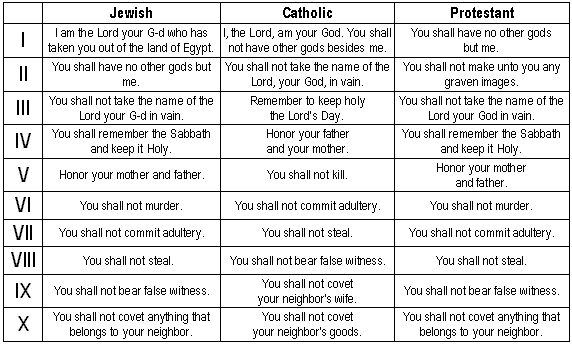
In Jewish tradition, the Decalogue (Aseret HaDevarim, “The Ten Words”) is structured differently from how Christian traditions commonly divide the commandments. According to the Masoretic Text and Jewish tradition, the Second Word (Davar Sheni) is:
“You shall have no other gods before Me. You shall not make for yourself a carved image, nor any likeness of that which is in the heavens above, or that is in the earth below, or that is in the water beneath the earth. You shall not bow down to them, nor serve them, for I, YHVH your God, am a jealous God, visiting the iniquity of the fathers upon the children to the third and fourth generation of those who hate Me, but showing mercy to thousands, to those who love Me and keep My commandments.” (Exodus 20:3-6, Deuteronomy 5:7-10)
Why Is This the Second Word?
- Jewish tradition counts “I am YHVH your God” (Exodus 20:2) as the First Word, not as a commandment, but as a declaration of divine identity and relationship.
- The Second Word, therefore, covers the prohibition of idolatry and false gods.
- This structure emphasizes that Israel’s covenant with God is first established by His self-revelation (First Word), and then by the exclusive nature of their worship of Him (Second Word).
- This aligns with the Jewish view that belief in God’s existence is not a “commandment” but an inherent truth, while idolatry is the first true prohibition in the Decalogue.
Christian Tradition: The Second Commandment
In Christian traditions, the structure of the Ten Commandments differs based on denominational interpretations:
- Protestant (Reformed, Evangelical) Tradition:
- Like the Jewish tradition, many Protestants count “You shall have no other gods before Me” and the prohibition against graven images as one single commandment (Second Commandment).
- This maintains a strong emphasis on avoiding idolatry, similar to the Jewish view.
- Roman Catholic and Lutheran Tradition:
- The First Commandment includes both:
- “You shall have no other gods before Me”
- The prohibition against graven images
- The Second Commandment (in Jewish and Protestant counting) is absorbed into the First Commandment in Catholic/Lutheran tradition.
- Instead, they make “Do not take the Lord’s name in vain” the Second Commandment.
- To maintain ten commandments, they split the final prohibition on coveting into two separate commandments:
- “Do not covet your neighbor’s wife”
- “Do not covet your neighbor’s goods.”
- The First Commandment includes both:
Key Differences Between Jewish and Christian Traditions
| Tradition | First Word/Commandment | Second Word/Commandment |
| Jewish Tradition | “I am YHVH your God” (Declaration of Divine Identity) | “You shall have no other gods before Me” + “You shall not make graven images” (Prohibition of Idolatry) |
| Protestant Tradition | “You shall have no other gods before Me” | “You shall not make graven images” |
| Catholic/Lutheran Tradition | “You shall have no other gods before Me” + “You shall not make graven images” (Combined as First Commandment) | “Do not take the Lord’s name in vain” |
Theological Implications
- Jewish Perspective:
- The First Word (“I am YHVH your God”) is foundational because belief in God is not considered a “commandment” but a self-evident reality.
- The prohibition against idolatry is comprehensive, rejecting not only foreign gods but any physical representation of YHVH Himself (hence the opposition to making an image of God).
- Christian Perspective:
- Protestants largely retain the Jewish structure, making the prohibition against idolatry its own commandment.
- Catholics and Lutherans combine the prohibition against idolatry with the first commandment, which has historically allowed for the use of religious imagery, icons, and statues in worship—a practice that Jewish tradition strongly opposes.
Conclusion: Why This Distinction Matters
Understanding the difference in the Second Word between Jewish and Christian traditions reveals how theological perspectives shape biblical interpretation.
- In Jewish thought, the focus is on covenantal identity and exclusive worship of YHVH, rejecting idolatry in all forms.
- In Christian traditions, variations in numbering reflect differing views on religious imagery, divine law, and worship practices.
This distinction influences everything from Jewish resistance to visual representations of the divine to Christian acceptance of sacred art and iconography in certain traditions.

 Ask The Teacher
Your voice matters. Iron sharpens iron. What insights or questions do you bring to the table?